The one-word change to Rule 609 that cleared two committees, then was pulled back.
Adding “substantially” to the test for impeaching a testifying criminal defendant with a prior conviction won a 7-2 Advisory Committee vote and unanimous Standing Committee approval. Then members of the Judicial Conference's Executive Committee raised concerns, and the amendment went back for more study.
By Simone Beaumont, Senior Editor
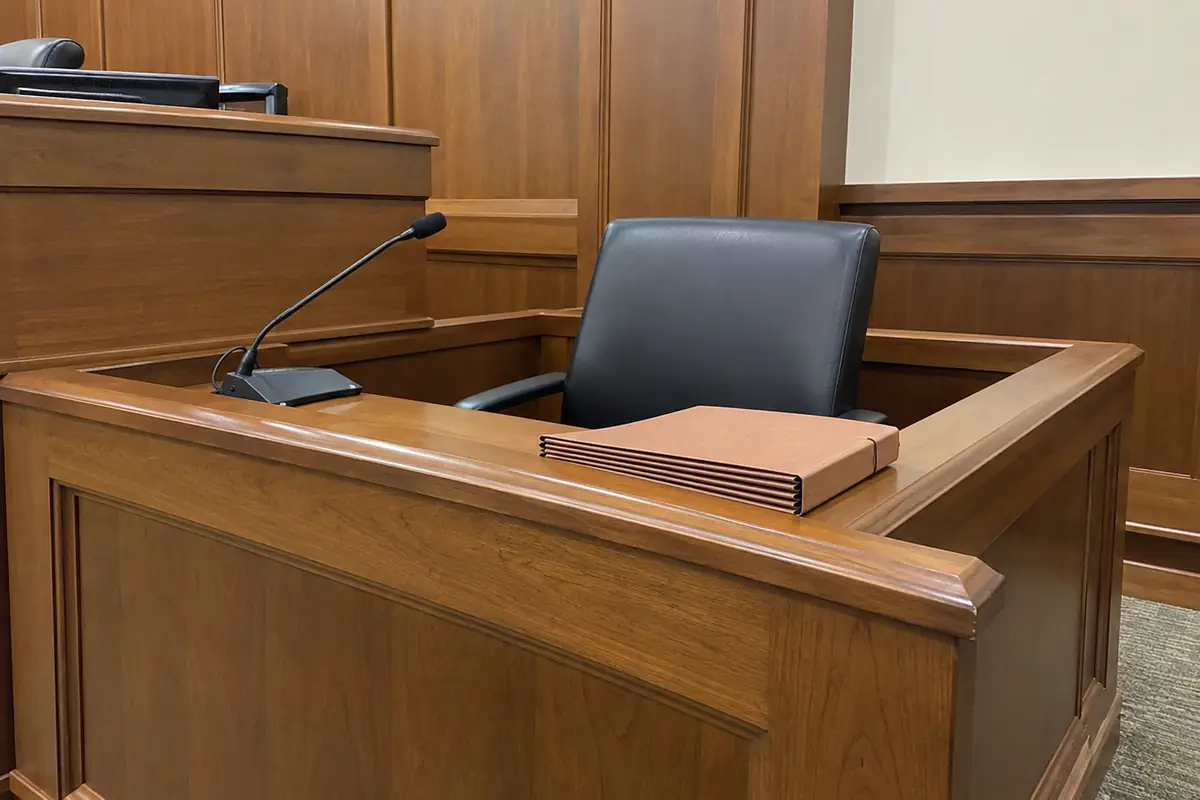
The proposed change added one word to the defendant standard
Federal Rule of Evidence 609 governs impeachment with a witness's criminal conviction.
Under Rule 609(a)(2), a conviction must be admitted for any witness when the offense required proof of a dishonest act or false statement. No balancing applies.
Other felony-grade convictions, meaning offenses punishable by death or more than one year, are treated differently. Under Rule 609(a)(1)(A), they must be admitted against an ordinary witness, subject to Rule 403. Under Rule 609(a)(1)(B), such a conviction must be admitted against a criminal defendant who testifies if its probative value outweighs its prejudicial effect to that defendant.
The proposed amendment would have added one word to that test. The conviction would be admissible only if its probative value “substantially” outweighed its prejudicial effect.
When we read the redline in the Reporter's September 18, 2026 memo, included in the 221-page agenda book for the October 15, 2026 Advisory Committee meeting, the entire change to Rule 609(a)(1)(B) was a single underlined word on line 9: “substantially.”
The proposal also addressed Rule 609(b). When more than 10 years have passed since the conviction or the witness's release from confinement, whichever is later, the conviction may be admitted only if its probative value, supported by specific facts and circumstances, substantially outweighs its prejudicial effect. The proponent must also provide reasonable written notice.
The proposed revision would have stated that the 10-year period runs to “the date that the trial begins.” The current rule does not identify the endpoint. The Reporter's memo cites a split, including Rodriguez v. United States, 286 F.3d 972 (7th Cir. 2002), which used the date of the present offense, and United States v. Thompson, 806 F.2d 1332 (7th Cir. 1986), which used the date the trial began.
The amendment cleared two committees before withdrawal
Public comment ran from August 2025 through February 2026. At a January 15, 2026 public hearing, Professor John Blume of Cornell Law School testified in favor and cited empirical evidence that many defendants were deterred from testifying by the threat of impeachment.
The Reporter's memo says public comment on the 609(a)(1)(B) change was “uniformly positive.” Supporters included the Federal Magistrate Judges Association, the American College of Trial Lawyers, the New York City Bar Association, the Federal and Community Defender members of the Defender Services Advisory Group, and the National Association of Criminal Defense Lawyers.
In spring 2026, the Advisory Committee on Evidence Rules gave final approval by a 7-2 vote. Judges Sullivan and Massa voted against the amendment. The Department of Justice voted in favor.
The Standing Committee, formally the Committee on Rules of Practice and Procedure, approved the proposal unanimously in June 2026. Ordinarily, the amendment would then have gone to the Judicial Conference's consent calendar and on to the Supreme Court.
That path stopped in August. Members of the Judicial Conference's Executive Committee raised concerns. The Standing Committee then voted unanimously to withdraw its recommendation and return the proposal to the Advisory Committee before the Judicial Conference's September 2026 session.
The Reporter's memo attributes the concerns to Judge Sutton, chair of the Executive Committee, and Judge Colloton, the Executive Committee's liaison to the Standing Committee. The Advisory Committee met in Boston on October 15, 2026, with Rule 609 on its agenda. The public agenda book includes the Reporter's memo but does not state the outcome of that meeting.
Law360 reported on October 20, 2026, that the Department of Justice had withdrawn its support.
Members of the Executive Committee challenged the amendment's foundation
Members of the Executive Committee said Congress made a deliberate compromise when it enacted Rule 609 in 1975. In their view, tilting the test further toward criminal defendants would upset that compromise.
They also objected to using rulemaking to correct courts that are applying an existing rule incorrectly. Their position was that appellate review, not a rule amendment, is the proper remedy for a misapplication.
The committee materials drew particular criticism. The proposed Committee Note described the current test as a “reverse” balancing test. Members of the Executive Committee said it is an even balancing test. The Note also said the new standard protected the accused's constitutional right to testify. They responded that the Supreme Court has not held that impeachment with prior felony convictions infringes a constitutional right to testify.
Another paragraph criticized “sanitizing” convictions by telling a jury only that the defendant has a felony without identifying the offense. Members of the Executive Committee said that discussion fell outside the amendment's scope and amounted to rulemaking by Committee Note.
They questioned whether any justification for the amendment would remain if those portions of the Note were removed. They also emphasized that the Advisory Committee vote was not unanimous. Judges Sullivan and Massa had voted against the proposal.
Supporters say appellate review rarely reaches the ruling
The Reporter's memo responds that the amendment is consistent with Congress's intent to give accused witnesses extra protection. It says many courts are not applying Rule 609(a)(1)(B) as Congress intended.
The memo rejects the view that rulemaking cannot address that problem. It points to the 2023 amendment to Rule 702 on expert testimony as an example of rulemaking used to correct courts' misapplication of an existing rule. It also notes that Rule 609 has been amended twice before, after Green v. Bock Laundry, 490 U.S. 504 (1989), and in 2006.
The memo says a lack of unanimity is not a bar. It cites Rule 801(d)(1)(A), which passed by an 8-1 vote. It also notes that the Department of Justice, described as the entity most affected, had approved the amendment at that stage.
The practical problem, according to the memo, is that appellate review often never occurs. Under Luce v. United States, 469 U.S. 38 (1984), a defendant can appeal an adverse Rule 609 ruling only if the defendant actually testifies at trial. A defendant who stays off the stand cannot obtain review of the ruling, and abuse-of-discretion review rarely results in reversal.
The memo's appendix identifies cases it says misapply the existing test. In United States v. Pettyjohn, 161 F.4th 535 (8th Cir. 2025), the court affirmed allowing the government to ask a drug defendant about a prior conviction for possession with intent to distribute. In United States v. Goodbear (E.D. Okla. Oct. 7, 2025), five felony convictions were ruled admissible to impeach the defendant if the defendant testified.
The memo proposed a revised Committee Note. It would remove the “reverse balancing” label, the constitutional-right sentence, and the paragraph on sanitization. It would add that experience has shown Congress's intent “has often not been realized.”
It also discussed separating the Rule 609(b) revision and allowing that narrower piece to proceed alone. The Executive Committee had raised no concerns about 609(b).
Defense groups say withdrawal threatens the rulemaking process
NACDL's September 30, 2026 letter to Judge Jesse M. Furman called the amendment one of the most important the committee has considered for the defense bar. Signed by Executive Director Lisa M. Wayne and President C. Melissa Owen, the letter described the withdrawal after Standing Committee approval as “highly unusual” and said it risked the credibility of the Rules Enabling Act process.
NACDL argued that the threat of impeachment keeps defendants off the stand and pushes them toward pleas. The letter cited Professor Blume's study of 152 DNA exonerees. Nearly one in four did not testify at trial, and 91 percent of those defendants had prior convictions that could have been used against them.
The Federal and Community Defenders, through the Defender Services Advisory Group, made a similar argument in an October 1, 2026 letter. Co-chairs Stephen C. Newman, Federal Public Defender for the Northern District of Ohio, and Kim Hodde, Panel District Representative for the Middle District of Tennessee, called the withdrawal an unexpected and, to their knowledge, “unprecedented” departure from the process. They asked the committee to return the amendment to the Standing Committee and the Judicial Conference.
Lawyers still apply the current text and must preserve the ruling
Nothing has changed in Rule 609. In a federal criminal trial, the current Rule 609(a)(1)(B) standard applies. Probative value must outweigh prejudicial effect to the defendant. A dishonesty or false-statement conviction under Rule 609(a)(2) still comes in automatically.
If the Judicial Conference had approved the proposal in September 2026, it would have gone to the Supreme Court and, absent congressional action, could have taken effect no earlier than December 1, 2027. Withdrawal means at least another cycle.
For defense counsel, the testify-or-not decision remains where the issue is won or lost. Build the motion in limine record before trial. A defendant who does not testify cannot appeal the Rule 609 ruling under Luce. Prosecutors should expect defense counsel to cite the committee materials and the cases collected in the Reporter's appendix when challenging similar or multiple convictions.
The 10-year clock under Rule 609(b) still has no stated endpoint. Check how your circuit and district measure it before relying on a conviction near the 10-year line.
For criminal defense firms, a caller's prior record is often among the first facts captured at intake, long before anyone decides whether the client will testify. Archivar answers a firm's calls 24/7 in English and Spanish, runs intake, and remembers everything the firm does, so the offense, conviction date, and release date can already be in the matter file when counsel drafts the motion in limine.
Watch the Advisory Committee's next steps and the minutes for its October 15 meeting. Also watch the Standing Committee's next meeting. Until the text changes, apply the rule that is on the books.
One word, “substantially,” cleared the Advisory Committee 7-2 and the Standing Committee unanimously.
Members of the Judicial Conference's Executive Committee raised concerns, and it went back for more study.
Until something changes, the current Rule 609(a)(1)(B) test governs every federal criminal trial.
The proposal
Add “substantially” to Rule 609(a)(1)(B), and set the start of trial as the endpoint for Rule 609(b)'s 10-year period.
The vote record
Advisory Committee on Evidence Rules: 7-2, with the Department of Justice in favor. Standing Committee: unanimous, June 2026.
Where it stands
Withdrawn in August 2026 before the Judicial Conference's September session, and returned to the Advisory Committee, which took it up on October 15.
What governs now
The current text. Probative value must outweigh prejudicial effect to the defendant, and dishonesty convictions still come in automatically.
Archivar
The Archivar Editorial Desk
Every date, vote, rule citation, case citation and quoted phrase above was checked against the Advisory Committee's October 15, 2026 agenda book and the Reporter's September 18, 2026 memo, and each side's position against the letters that state it. The report that the Department of Justice withdrew its support is attributed to Law360. This article is general information, not legal advice.
Sources: Advisory Committee on Evidence Rules, Agenda Book for the October 15, 2026 meeting, including Reporter Daniel J. Capra, Memorandum, Further Review of the Proposed Amendments to Rule 609 (September 18, 2026); National Association of Criminal Defense Lawyers, letter to Judge Jesse M. Furman (September 30, 2026); Defender Services Advisory Group, letter to Judge Jesse M. Furman, Rules Suggestion 26-EV-13 (October 1, 2026); Law360, report on the Rule 609 proposal (October 20, 2026); Federal Rule of Evidence 609; Luce v. United States, 469 U.S. 38 (1984).