The Docket
The rulings and rules that change how firms run.
The rulings, rules, and shifts that change how firms run.
The 100-mile subpoena limit would be measured from the witness, not the court
A 2023 Ninth Circuit decision kept Rule 45's 100-mile radius pinned to the courthouse even when the witness appeared by video. A proposed rewrite would move the measurement, name four ways to serve a subpoena, and require 14 days' notice. Three consequences for practicing attorneys.

What MyCase costs now, and what changed between April and June
The vendor's pricing page lists Basic at $50 per user per month, Pro at $100 and Advanced at $130 on annual billing. A capture of the same page from April 12 lists $39, $89 and $109. What moved, and what sits outside the seat rate.

A 1938 railroad case still decides whose law your federal court applies
Erie Railroad Co. v. Tompkins overruled ninety-six years of Swift v. Tyson and held there is no federal general common law. In Berk v. Choy, decided January 20, 2026, the same framework kept a Delaware affidavit out of federal court.

What Clio actually costs, now that only one number is published
One price appears on the vendor's own pricing page: $49 per user per month on the entry plan. The three plans above it show a Get pricing button. What the January captures showed, what came off the page during 2026, and what is still published.
Texas trial courts start reporting whether they ruled on time
Senate Bill 293 put deadlines on Texas trial courts for summary judgment, a completely rewritten Rule 166a carried them into practice on March 1, and the first quarterly compliance reports are due September 20. Three consequences for practicing attorneys.
The Clio alternatives a small firm can price without calling sales
Six practice management vendors publish a per-user rate you can read in ten seconds. Three publish none at all. What the published numbers include, what sits outside them, and the terms to pin down before signing.
Illinois will let courts weigh a pet's well-being when the owners never married
Public Act 104-0613 writes companion animals into the replevin article of the Code of Civil Procedure, lets a court consider the animal's well-being whatever the parties' legal status, and says ownership documentation may not decide it alone. Three consequences for practicing attorneys.
Dropping one claim would no longer mean dropping the whole case
An amendment to Federal Rule of Civil Procedure 41(a) has cleared the Standing Committee and is before the Judicial Conference. It would let a plaintiff voluntarily dismiss one or more claims rather than only an entire action. Three consequences for practicing attorneys.
Federal filings may have to redact the whole Social Security number
Privacy amendments published for comment on August 14 would end the last four digits convention in civil and criminal filings, swap a minor's initials for a pseudonym, and say on the face of the rule that redaction reaches exhibits and attachments. Three consequences for practicing attorneys.
Washington will admit some new lawyers without a bar exam score
A venue technology failure stopped the country's first NextGen bar exam before day one began in Yakima. Three emergency orders later, part of the July 2026 class is admitted by court order rather than by score. Three consequences for practicing attorneys.
A $1,600 charge disallowed in 1796 still decides who pays your fees
The Supreme Court's report in Arcambel v. Wiseman runs a few sentences and never names a doctrine. It is still the citation the Court reaches for when it explains where the American Rule came from, and a unanimous 2019 decision shows how demanding that rule remains.
Florida initial briefs now have to state their own jurisdiction
A corrected June 11 order amended four Florida appellate rules. Since September 1, the initial brief opens with a jurisdictional statement, and every issue needs a record citation showing where it was preserved. Three consequences for practicing attorneys.
The judiciary just told judges to ask who else is paying their interns
A federal ethics committee published Advisory Opinion No. 119 this month, its first squarely on law firm stipends paid to the unpaid students who work in judges' chambers. The answer turns on one question, and timing is only half of it. Three consequences for practicing attorneys.

The Supreme Court now needs the ticker symbol, not just the party name
In January a Justice left an argued case over a company that had dropped out of the caption but was still a party in the district court. A month later the Court revised four of its filing rules, and one unrelated line changed what counts as filing on time. Three consequences for practicing attorneys.
Illinois is changing what a limited law license can lead to
One order entered April 14, 2026 amended five Illinois admission rules on three effective dates. The eighteen-month ceiling on a legal aid lawyer's limited license is gone, the time under it now counts toward admission on motion, and a course requirement lands October 1. Three consequences for practicing attorneys.
Virginia is changing who controls a case during an interlocutory appeal
A Virginia circuit court has kept concurrent jurisdiction during most interlocutory appeals since 2021. An order entered July 17, 2026 rewrites Rule 1:1C, and on September 15 the appellate court takes exclusive control of the appealed order in five kinds of case. Three consequences for practicing attorneys.
The jury selection rule that reached only three kinds of civil case
California's peremptory challenge statute was written in 2020 to take over civil jury selection on January 1, 2026. Senate Bill 645 deleted that date and named three categories of civil case instead. Three consequences for practicing attorneys.
Bankruptcy is getting its own standard for testimony by video
Three linked amendments effective December 1, 2026 pull bankruptcy contested matters out from under Civil Rule 43. A witness appearing from another location will need cause and appropriate safeguards, not compelling circumstances. Three consequences for practicing attorneys.
California is rewriting what counts as serving a summons
A defendant learned about a $486,528 default judgment in 2020, when his wages were garnished. The Supreme Court of California held in 2024 that no deadline barred his challenge, and the Legislature then rewrote the service statutes. Three consequences for practicing attorneys.

A $2 million sanction turned on the wall between a consultant and an expert
A federal judge in Georgia sanctioned a defendant a third time for withholding evidence, finding a litigation consultant's testing reproduced inside the testifying expert's report. Reuters reported this month that two law firms were ordered to pay $2 million. Three consequences for practicing attorneys.
A lie detector rejected in 1923 still decides which experts a jury hears
A Washington murder defendant asked a court to let a blood pressure machine vouch for him. The judges said no, in under a thousand words, and wrote the general-acceptance test that still keeps novel science out of courtrooms in California, New York, Illinois, Pennsylvania, Washington, and Minnesota.

New Jersey just adopted the conflict rule it turned down in 2003
The Supreme Court of New Jersey amended RPC 1.8 on July 23, 2026 to add a new paragraph (k) barring sexual relations with a client absent a relationship that predates the representation, and extended it to an entity client's litigation control group. Three consequences for practicing attorneys.

The hearsay rule is losing its oath requirement on December 1
The Supreme Court adopted an amendment to Federal Rule of Evidence 801 on April 8, 2026, deleting the requirement that a witness's earlier inconsistent statement have been made under penalty of perjury before a jury may treat it as proof. Three consequences for practicing attorneys.
Law schools just got three more years to admit students without the LSAT
The ABA's Section of Legal Education and Admissions to the Bar Council voted to extend by three years the window for law schools to apply for a variance letting them admit students without a standardized test score, an option first authorized in 2024 and currently used by 21 schools.
New York just rewrote the rules for lawyer advertising and solicitation
New York's Appellate Division replaced a long list of detailed, format-specific advertising requirements with a single false-or-misleading standard, and dropped the 30-day pause on soliciting people about a specific accident. Three consequences for practicing attorneys.

A federal court that sends a case to arbitration keeps the case
The Supreme Court unanimously held that a federal court which stays a case for arbitration keeps jurisdiction to later confirm or vacate the resulting award, narrowing the practical reach of Badgerow v. Walters. Three consequences for practicing attorneys.

Class action lawyers deserve to be paid, a court just said
A $3.7 million class action fee award has now been vacated twice by the Third Circuit. The second ruling holds that Perdue's limits on lodestar multipliers reach contractual fee-shifting settlements, not just statutory ones. Three consequences for practicing attorneys.

A 1917 endorsement deal with no promise in it still shapes your contracts
Lucy, Lady Duff-Gordon, sold the exclusive right to market her name, then peddled her own endorsement and kept the money. She argued there was no contract, because the other side had promised nothing. Wood v. Lucy, and the implied promise Cardozo found in it, still governs exclusive deals.

A broken mill shaft in 1854 still decides which losses you can recover
When a Gloucester flour mill stopped and a carrier was late returning the broken part, the miller sued for the profits lost while the wheels stood still. Hadley v. Baxendale set the rule that still limits which losses a broken contract makes a party pay for.

The rule so hard that getting it wrong wasn't malpractice
In 1961 the California Supreme Court excused a lawyer who botched the Rule Against Perpetuities, because the rule was too treacherous to expect anyone to get right. The same case, Lucas v. Hamm, first let will beneficiaries sue a drafter who was never their lawyer.
A California court just said "potential" conflicts can void your fee agreement
A published Court of Appeal opinion extends Sheppard v. J-M Manufacturing to potential, not just actual, conflicts of interest: an undisclosed one voided a firm's own engagement agreement and arbitration clause. Three consequences for practicing attorneys.
The file that lived in one person's head
Every firm has one person who knows a matter cold: the deadlines, the ex-husband's name, why the client cries when you mention the house. Then she takes a week off, and the firm learns how much of the file was never written down.
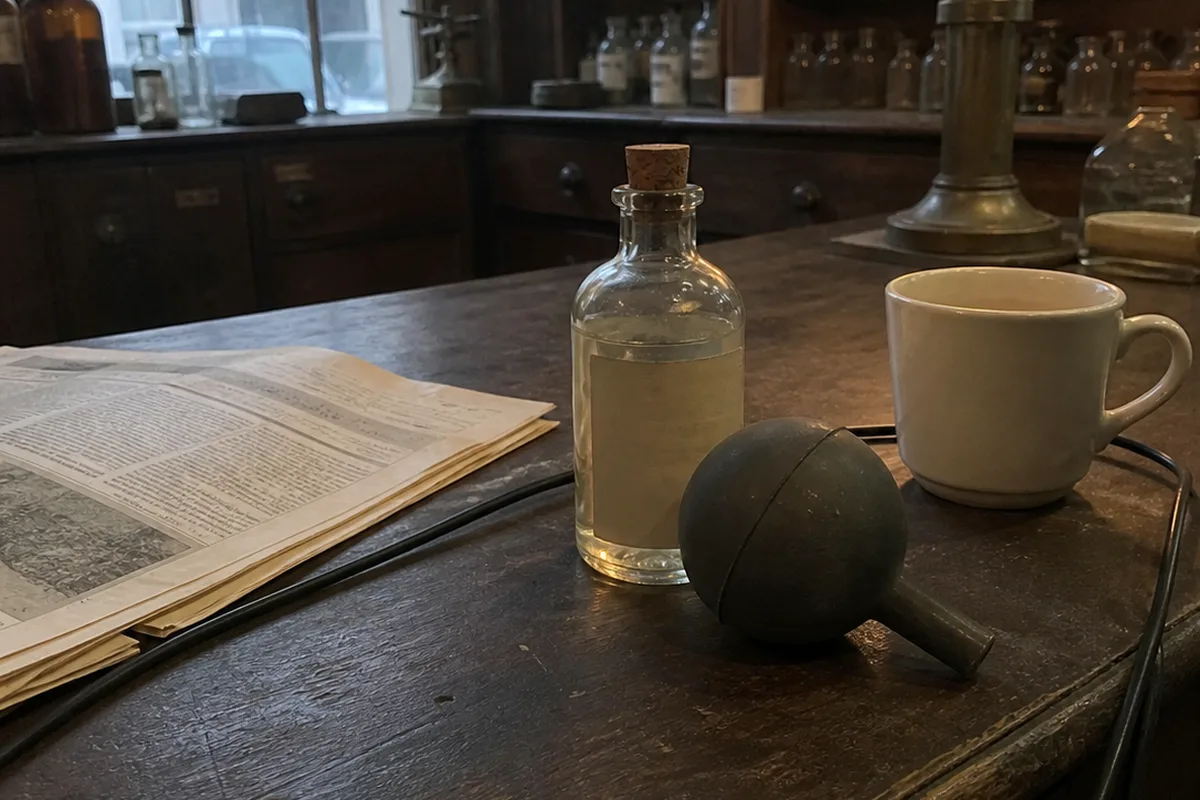
The advertisement that a court turned into a contract
In 1891 a company promised £100 to anyone who used its flu remedy and caught influenza anyway. When a London woman did exactly that and sued, Carlill v Carbolic Smoke Ball Co gave the common law its most famous lesson in when an advertisement becomes a binding contract.

The fox hunt that still decides who owns what
In 1805, two Long Island men fought to New York's highest court over a near-worthless dead fox. Pierson v. Post, and the rule it wrote, that pursuit is not possession, still decides who owns oil, gas, groundwater, and wild game.

A law from 1677 still decides which promises must be in writing
An English statute passed against perjury in 1677 is the reason a court may refuse to enforce a deal you can prove was real. It survives in every state's law and in the UCC. What it covers, and the exceptions.
California's high court just changed how attorneys remove a judge
The California Supreme Court partially overruled 50-year-old precedent, opening blanket peremptory judicial challenges under section 170.6 to review for the first time since 1977. Three consequences for practicing attorneys.
The package that set the reach of negligence
A man ran for a moving train, a guard pushed him aboard, and a parcel of fireworks fell. The 1928 case that followed, Palsgraf, gave American law its most argued-over test for how far a careless act reaches.

After hours isn't after the client stops needing you
79% of clients expect a reply within 24 hours, and 68% expect some contact outside business hours, per Clio's 2019 and 2022 Legal Trends Reports. What the after-hours gap actually requires to close.

The shot that forced the law to define insanity
In 1843 a man fired at the wrong target on a London street. The killing made judges write down, for the first time, exactly when a person is too ill to be guilty.

When a click became a signature
A typed name or a clicked 'I agree' can bind you as firmly as ink. The ESIGN Act and UETA settled that a generation ago. What makes an e-signature valid, what still needs wet ink, and the consent step firms miss.

The rule that gave homicide a deadline
For centuries, a death that came more than a year and a day after the blow could not be murder. Medicine made the rule obsolete, and in 2001 the Supreme Court let a state erase it.

The bar exam just changed for the first time in a generation
This July, ten US jurisdictions gave the NextGen bar exam for the first time. It tests fewer memorized subjects and more of what lawyers actually do. Here is what changed.

Someone called 500 law firms. Most didn't answer.
Researchers posing as new clients secretly shopped 500 law firms: 40% answered the phone, 48% were unreachable entirely. The verified numbers on what callers actually reward.

The form that almost got filled out
A late-night visitor hits a case-number field she can't fill and a dropdown she doesn't understand. She closes the tab. The firm never knows the form was started at all.

The consult who said yes, then went quiet for a week
A prospect confirms her consult, sounds committed, then goes silent for a week. The firm assumes she moved on. She was waiting to be told what happens next.
The call that never rang
A scared caller finally dials a law firm at 9:40 p.m., hits a phone tree built for people who already know where they're going, and hangs up. What she needed was a conversation, not a menu.
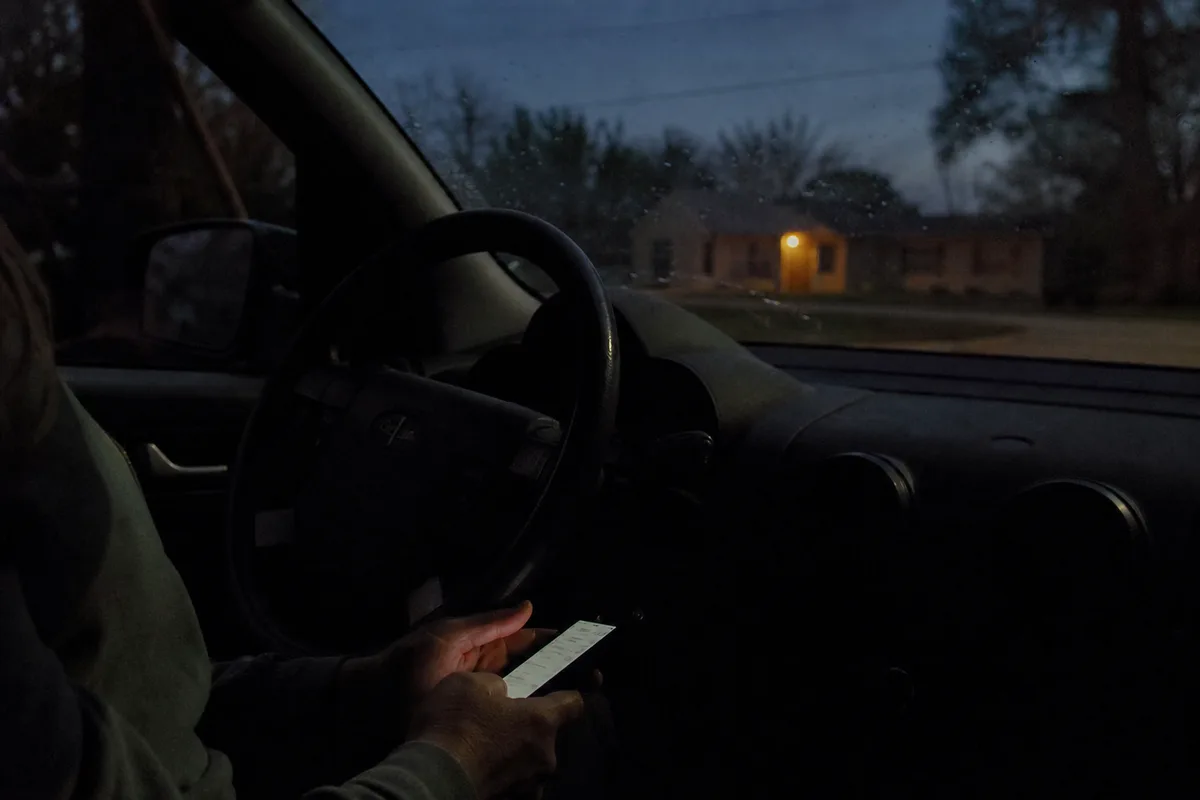
The case you never knew you lost
Every firm can name the clients it signed. Almost none can name the ones who called once, heard nothing, and moved on: the only loss in a practice that never announces itself.

The decision that never left the room
Your Tuesday meeting made three good decisions. By the following Tuesday, two of them exist only as what four people separately remember agreeing to.
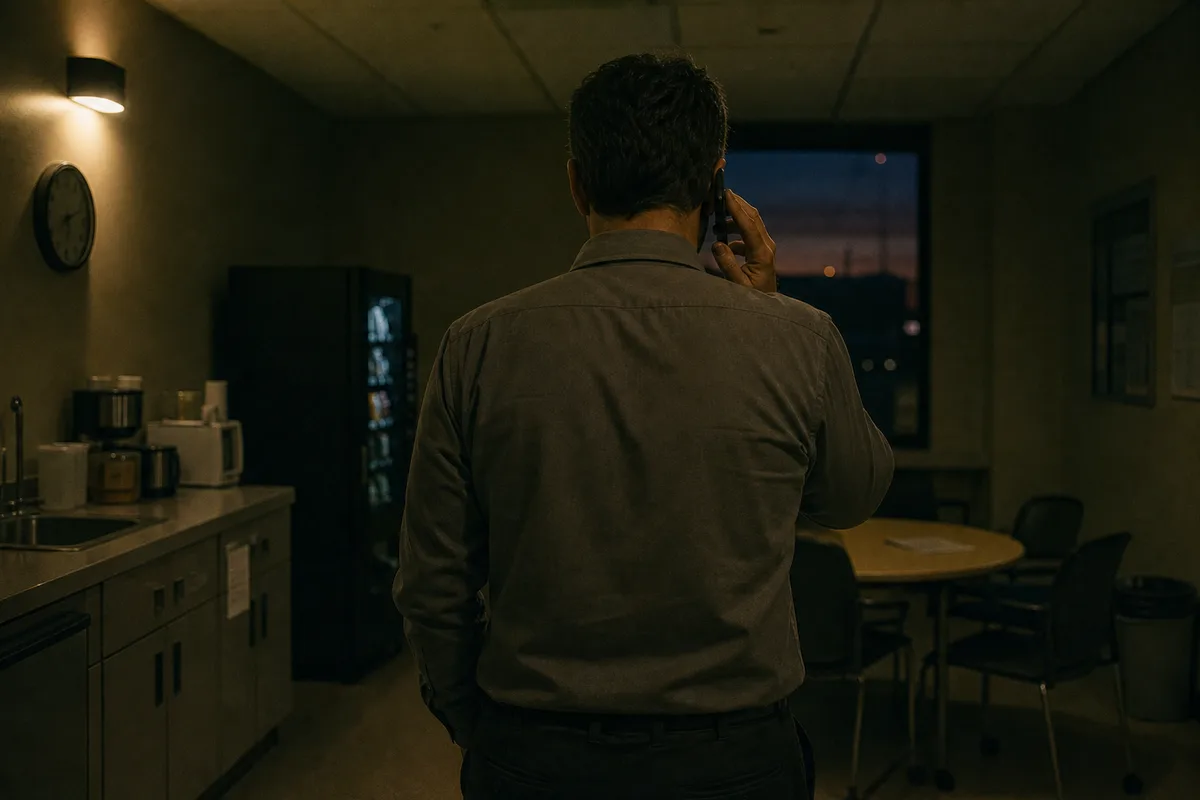
The client who called in Spanish
More than one in four Californians speaks Spanish at home. When one of them calls a firm that answers in English only, the consultation is over in the first nine seconds.
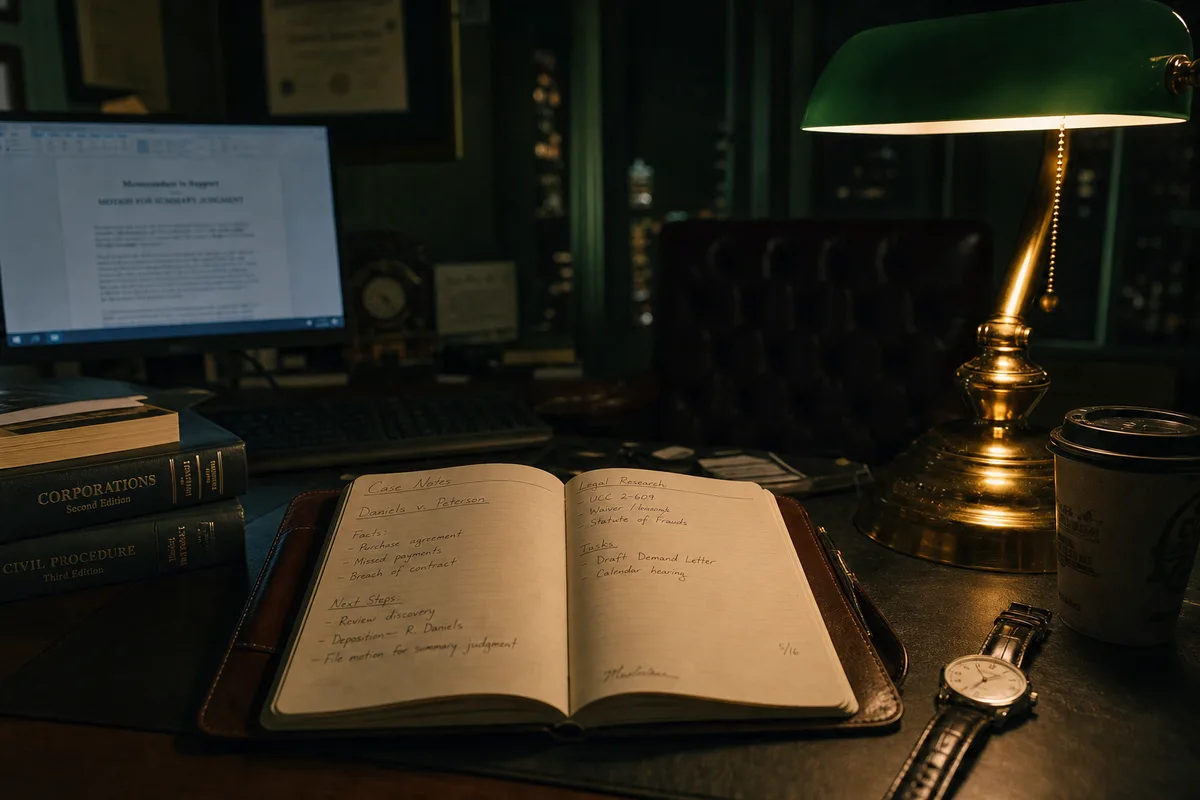
The billable hour that never happened
At 6:10 p.m. you rebuild your day from sent mail and a call log. The eleven-minute call that solved everything isn't in either place.
New pieces are published regularly. Want them in your inbox? Tell us.

Archivar
Run your firm on one memory.
See what one AI platform can do for your firm, live, on your own practice area.
Full platform access · built for compliance