The client who called in Spanish.
More than one in four Californians speaks Spanish at home. When one of them calls a firm that answers in English only, the consultation is over in the first nine seconds.
By Helena Harper, Editorial Director
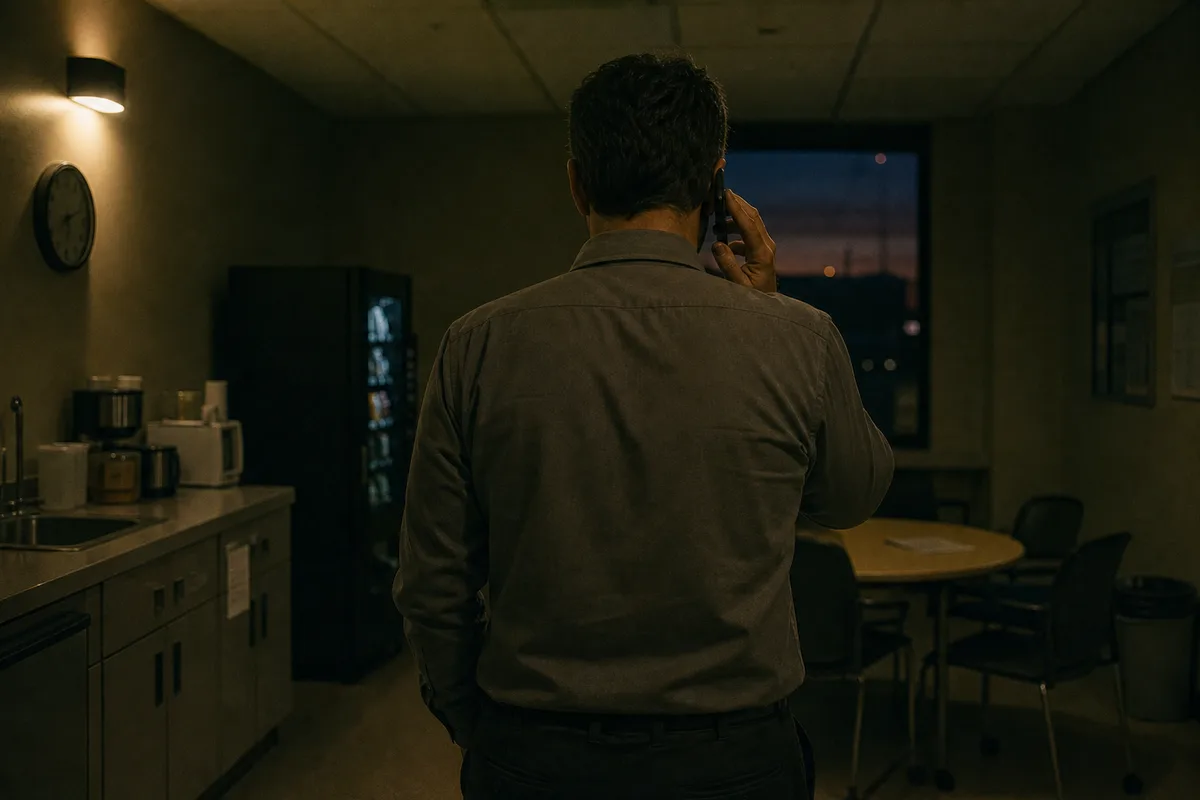
10:04 on a Tuesday
A man steps into the break room at work, checks the door, and calls your firm. It is about his daughter. He has ten minutes.
He has rehearsed his opening line in English, and it comes out fine: "I need to speak with a lawyer about a custody problem." The receptionist asks, kindly, what's going on.
And there the rehearsal ends. Because the answer to what's going on is not one sentence. It is dates, and an incident, and a thing his ex-wife's brother said in front of the children, and the difference between what he is afraid of and what he can prove, and all of that lives in Spanish. He starts, stops, apologizes in a language he is simultaneously trying to think in.
"One moment," the receptionist says, warm and helpless, "let me see if anyone..." and the hold music starts.
He looks at the clock. Six minutes left. He hangs up.
The second sentence
This is the part worth sitting with: he was not failing to speak English. The situation was failing to let him be precise. And precision is the entire reason anyone calls a law firm. He can order lunch in English. He cannot describe the worst month of his family's life in it, not with the dates right, not with the quotes exact, not under a clock.
By the Census Bureau's count, more than one in four Californians speaks Spanish at home, the highest share of any state in the country. For a California firm, that is not a demographic footnote. That is the caller ID.
He isn't asking the firm to speak Spanish. He's asking to be exact about his own life.
The nephew problem
That evening he tries again, the way thousands of families do: his nephew, nineteen, on speakerphone at the kitchen table, translating between his uncle and a different firm's after-hours line.
Now count what the intake sheet receives. A frightened father's account, compressed by a teenager deciding in real time what his uncle meant, softened where it embarrasses the family, reordered where the nephew lost the thread. There are things a man will not say about his marriage through his sister's son at all, so those are simply gone.
What arrives on the other end is a summary of a translation of a summary. The firm will make its first judgments about the case from it. Everyone involved did their loving best, and the record is thinner and blurrier for it.
What "bilingual" has to mean
Plenty of firms say se habla español. For the man in the break room, the claim gets tested in the first nine seconds, and it has to hold all the way through.
From the first ring
Not a transfer to "the one who speaks Spanish" (who is in a deposition). The greeting itself, in either language.
The whole conversation
Intake, scheduling, the follow-up text: all of it, not a bilingual hello with an English-only everything else.
Exact in the record
His facts land in the matter as he said them, in his words, not a summary of a translation of a summary.
At 8 p.m. too
The call comes when his shift ends, not when an interpreter happens to be standing near the phone.
None of that is exotic either. It is just very hard to staff: a fluent, patient, legally-literate listener on every line, at 10:04 and at 8 p.m., in both languages.
Where we come in
This is the call Archivar answers in the caller's own language, from the first word: English or Spanish, greeting through intake through the confirmation text. The man in the break room tells his story once, the way he actually knows it, and it lands in the matter in his words. When the attorney reads it Monday, nothing has been lost through a nephew.
Archivar supports your attorneys and staff. It never gives legal advice or replaces a lawyer's judgment. It takes the story down exactly and gets it to the person whose judgment the family is actually hiring.
Nobody chooses a firm because it answered in their language. They just don't hang up, and everything else follows from that.
The next call may start in Spanish. Be the firm where the second sentence gets to exist.
Archivar
The Archivar Editorial Desk
Researched and fact-checked against primary sources. General information for attorneys, not legal advice.
Sources: U.S. Census Bureau, American Community Survey (language spoken at home).