The call that never rang.
She stood in the hallway with the phone against her ear for eleven minutes, working up the nerve. Press 1 for existing clients. Press 2 for billing. Press 3 for the front desk. She never found out where the human was.
By Helena Harper, Editorial Director
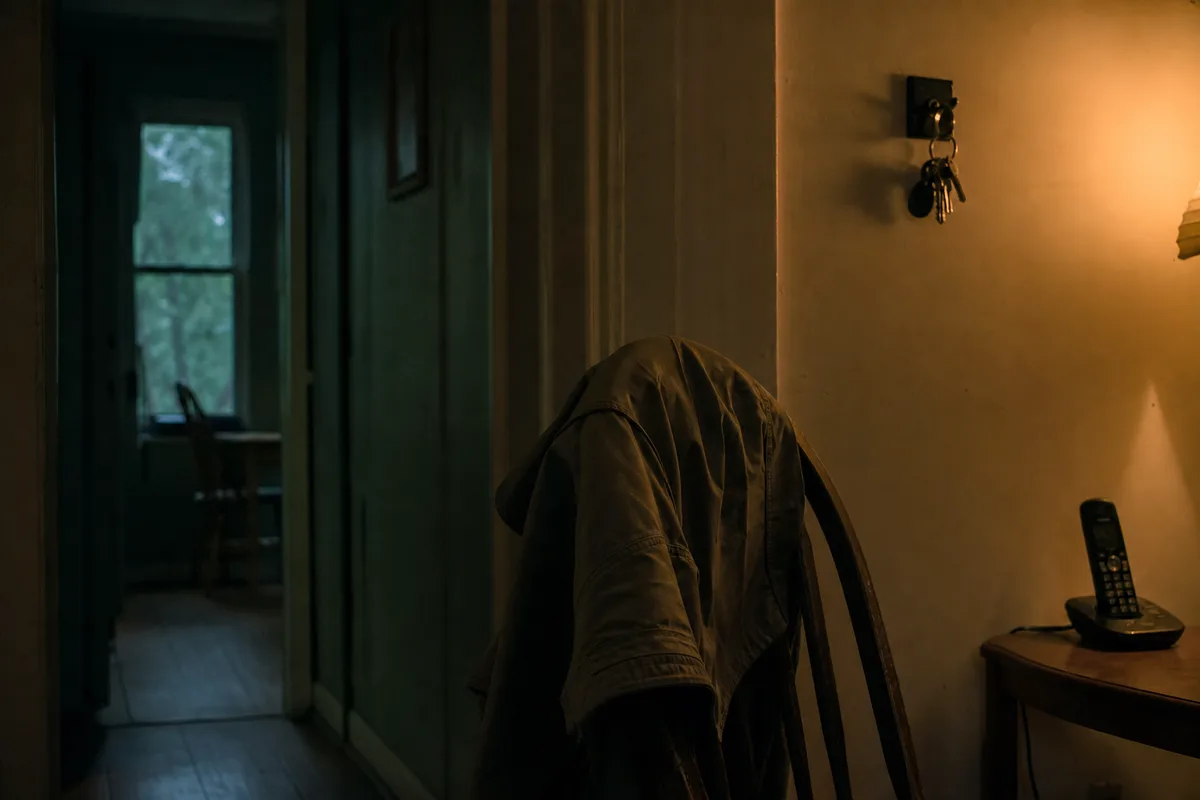
Nine forty on a Tuesday
She'd rehearsed it twice in the mirror. Not the legal words, she didn't have those yet, just the first sentence: I need to talk to someone about a letter I got. It had been sitting on the counter for six days, and every time she walked past it she felt the same drop in her stomach. Tonight, coat still over the chair, keys still on the hook, she finally picked up the phone.
It rang once. Then a recording, upbeat in a way that didn't match her evening at all: Thank you for calling. For existing clients, press 1. For billing, press 2. For our front desk, press 3. She wasn't an existing client. She didn't have a bill. She wasn't sure a front desk was even the right word for what she needed, which was just: a person, listening, right now.
She pressed 3. Another recording. Hold music, tinny through the phone's small speaker. She stood in the hallway for eleven minutes, the rehearsed sentence going stale in her mouth, before the call dropped with no explanation at all. She didn't call back.
Nobody on that firm's staff ever knew the phone rang. Not because anyone was careless. Because the system was built for people who already know which button describes them, and she wasn't one of them yet.
The problem a menu can't solve
A phone tree assumes the caller can sort themselves before they've said a word. Existing client or new. Billing or something else. But a person calling about a scary letter, a sudden arrest, a diagnosis that just became a lawsuit, doesn't arrive pre-sorted. They arrive mid-sentence, still deciding whether they're even allowed to be calling a lawyer about this. Ask them to press a number before they've spoken and a fair number will simply hang up, the same way she did.
That's the gap conversational reception is built to close. It answers from the first word as a conversation, not a menu. It says plainly that it's an AI assistant, so nobody feels tricked into confiding in something they thought was a person. And it works in English or Spanish from the start, without asking someone already nervous to first choose a language on a keypad.
What actually changes when a call gets answered
A live answer matters more than most intake processes account for. In the 2024 Clio Legal Trends Report, summarized by 2Civility (the Illinois Supreme Court Commission on Professionalism), prospective clients who reached a live person were more than three times as likely to recommend the firm as the average contact across channels, and nearly eight times as likely as those whose call went to voicemail. And these calls aren't a rounding error: Ruby's 2023 Call Trends Report found that roughly one in five inbound calls to a legal practice is a new-client prospect, someone exactly like her, deciding in real time whether to stay on the line.
None of that requires guessing at her legal problem or telling her what to do about it. It just requires someone, or something, picking up and letting her finish the sentence she rehearsed.
Here's what conversational reception actually does differently:
Answers first
Archivar picks up from the first ring and starts talking like a person, not a menu. No pressing 1, no waiting to find out if this is even the right line.
Says what it is
It discloses that it's an AI assistant right away. No pretending to be a human, no trick, nothing to explain later.
Her language
English or Spanish, from the first word, without a menu prompt asking her to choose one before she's said anything at all.
A real handoff
It takes down what happened, opens the matter, and puts it in front of a person on your team, so the call that finally got made doesn't just evaporate into a queue.
The part where we're honest
Nobody wants a phone answered by something that pretends to be a lawyer. That instinct is correct, and it's exactly why Archivar's agent identifies itself as an AI assistant from the start, every call, in either language. There's no version of this where the caller finds out later.
What it's built to do is smaller and more specific: hold a real conversation, take down what happened, open the matter, and get it in front of your team fast, whether that's 9:40 on a Tuesday or 2 a.m. on a Saturday. It doesn't practice law. It makes sure the person who finally worked up the nerve to call gets a person on the other end of that decision, not a menu.
Archivar supports your attorneys and staff. It never gives legal advice or replaces a lawyer's judgment. It listens, it discloses what it is, it writes everything down, and it hands the judgment to someone qualified to use it.
She's still not sure if the letter on her counter is serious. What she knows is that the next time she calls, something will answer before she has a chance to change her mind.
The call she almost didn't make is the one every phone tree in the country is quietly losing.
Archivar
The Archivar Editorial Desk
Researched and fact-checked against primary sources. General information for attorneys, not legal advice.
Sources: the 2024 Clio Legal Trends Report, as summarized by 2Civility (the Illinois Supreme Court Commission on Professionalism); and Ruby's 2023 Call Trends Report.