Should lawyers skip the courthouse metal detector? Massachusetts proposes ending that on January 1, 2027.
The Massachusetts Trial Court proposes standard security screening for attorneys in dozens of courthouses. A defense-bar group says it would slow court calendars. The court calls it a preventative measure.
By Nathaniel Cross, Staff Writer
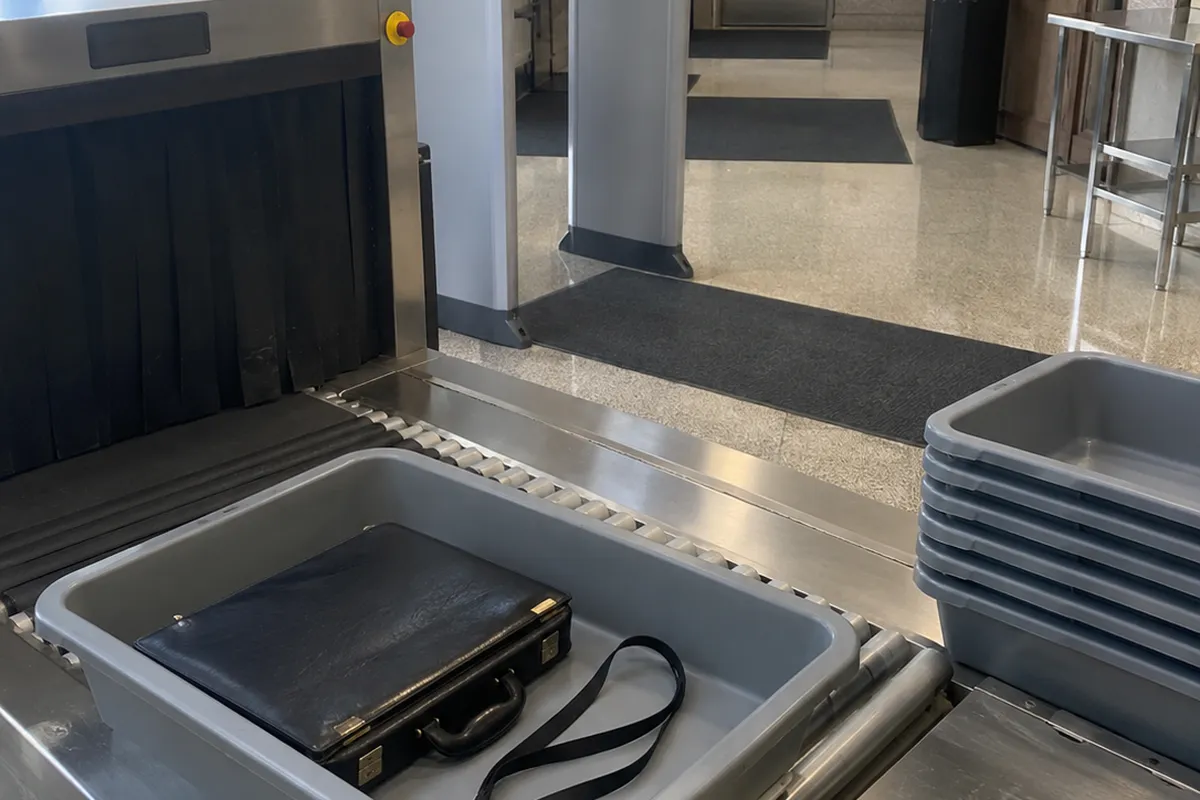
Attorneys would enter through public screening beginning January 1
The Massachusetts Trial Court is considering a plan that would require attorneys to pass through the same courthouse security as the public. Lawyers would put personal items on a screening conveyor belt and pass through metal detectors.
The change would apply in dozens of Massachusetts courthouses beginning January 1, 2027, if the court adopts the proposal. The public comment period ran through October 14, 2026.
Attorneys have a separate path into courthouses. It has no metal detectors and usually gets lawyers inside faster.
The Trial Court posted a public notice inviting comments from attorneys, bar associations and other stakeholders. The notice describes a policy requiring all attorneys entering Trial Court courthouse facilities to undergo the Security Department’s standard entrance screening. It asks for comments on courthouse access, logistics and communication.
The desk read WBUR’s full report line by line and tried to open the Trial Court’s notice page during review. The page returned an access error to the desk’s tools. The comment dates, the January 1, 2027 effective date and the court’s statements here therefore come from WBUR’s report and search-indexed text of the notice. The desk did not read the notice page itself.
The Trial Court calls the proposal a security measure
Trial Court spokesperson Jennifer Donahue said the proposed change is “a preventative measure intended to maintain safe, secure, and accessible courthouses for all who enter.”
The court said the proposal reflects best practices in court security and supports the state ban on firearms in courthouses. It said the proposal would apply to all attorneys, but not court personnel.
That distinction matters to the dispute. The court frames the policy as a rule for every attorney entering a Trial Court facility. The Massachusetts Association of Private Appointed Counsel (MAPAC) frames it as a measure that appears to reach private attorneys while leaving out other groups with courthouse access. MAPAC has asked the court to explain why the added measures appear to apply only to private attorneys and not to courthouse staff, prosecutors, judges or law enforcement.
MAPAC says the screening would disrupt court calendars
MAPAC said in a press release that the plan would “slow the work of justice and cast doubt on the lawyers who do it.”
Its president, criminal defense attorney Sean Delaney, described the proposed screening as an inconvenience that would affect the court’s daily schedule.
“It’s such an inconvenience. It’s going to disrupt the orderly process by which the court goes through its calendar on a daily basis.”
MAPAC’s statement also focused on lawyers’ professional status. “Every attorney has taken an oath to uphold the Constitution, passed a character and fitness review, and remains under ethical and disciplinary oversight for the rest of their career,” the group said. “No other group that enters the courthouse is held to more.”
MAPAC said hundreds of attorneys were submitting comments opposing the plan.
Delaney said he would support plans to improve courthouse security if they applied to everyone accessing the courts. He said he hoped to meet with the Trial Court representatives who drafted the proposal. “Everyone would agree that courthouse security is a top priority,” he said. “But this measure, where it only is directed at attorneys, falls short of what they’re looking to do unless they can explain a reason or that they’ve had a rash of attorneys going in with weapons and causing security issues.”
Universal screening and attorney passes offer different comparisons
As WBUR reported, the National Center for State Courts recommends universal screening of everyone entering courthouses. Under that model, judges, defendants and other courthouse users go through the same security.
The center said it is not known how many states use universal screening. It also said there is no comprehensive data on how additional screening affects safety. Its position is that everyone entering a courthouse should be professionally screened so guns do not get inside.
New York offers a different model for attorneys. Its court system issues a Secure Pass ID card that allows attorneys to enter New York State courthouses without passing through magnetometers. According to the New York Courts, the card requires a $50 processing fee and an electronic criminal history search, first-time applicants apply and pick up the card in person, it is valid for about five years, and it may be used only on official business, not personal matters.
New York’s system is an example of another approach. It does not resolve the Massachusetts dispute over whether attorneys should use standard screening.
A Change.org petition started by Justin McCarthy had 152 verified signatures toward a goal of 200 when the desk checked. It suggests designated entrances or limited screenings as possible compromises.
The practical effect would begin at the courthouse door
If the Trial Court adopts the proposal, attorneys appearing in affected courthouses would lose the faster separate entry. They would join the same screening line as the public beginning January 1, 2027.
That would affect arrival time before calendar calls. Lawyers with short windows between back-to-back courtrooms, first-call lists or clients waiting in hallways could need more time before entering the courthouse. The Trial Court’s notice is where logistics about courthouse access, screening and communication are described.
MAPAC, which speaks for private appointed counsel, has objected on the ground that screening lines could slow the orderly movement of daily court calendars.
Firms may also receive questions from clients and staff about what attorneys may bring through screening and how early lawyers should arrive. Those questions concern implementation, not whether the Trial Court will adopt the proposal.
Archivar, which publishes The Docket, builds an operating system for law firms that answers every call 24/7 in English and Spanish, runs intake, manages matters and remembers everything the firm does. When a lawyer is held up in a screening line or courthouse hallway, the firm’s calls, intake and matter records keep running without that lawyer at a desk.
The decision remains open after the comment period
The Trial Court’s final decision is not known in the sources reviewed. No source reviewed says whether the plan will change after public comments.
The proposal’s own dates are fixed: comments closed October 14, 2026, and the screening requirement would begin January 1, 2027, if adopted. The Trial Court’s notice materials are the place to look for access and logistics information, and standard screening time would be part of any January 2027 courthouse arrival schedule.
The Trial Court calls screening for attorneys a preventative measure.
MAPAC says it would slow the courts and treat lawyers differently from other groups.
The decision after the comment period was not reported in the sources reviewed.
The proposal
The Trial Court would screen attorneys like other visitors in dozens of Massachusetts courthouses starting January 1, 2027.
The objection
The Massachusetts Association of Private Appointed Counsel says screening would slow the work of the courts and cast doubt on lawyers.
The court's reason
The Trial Court calls it a preventative measure that reflects best practices and supports the state firearms ban.
Still open
Comments closed October 14, 2026. No source reviewed reports a final decision.
Archivar
The Archivar Editorial Desk
Every quotation, date and position above was checked against WBUR's October 12, 2026 report, which the desk read in full. The Trial Court's own notice page could not be opened by the desk, so its details are taken from WBUR and search-indexed text of the notice. The New York Secure Pass details come from the New York Courts' own page as indexed in search. This article is general information, not legal advice.
Sources: WBUR, Deborah Becker, "Attorneys voice objections to proposed new screenings in Mass. courthouses" (October 12, 2026); Massachusetts Trial Court, "Public Notice Inviting Comment on Massachusetts Trial Court Security Screening for Attorneys" (mass.gov, as indexed in search); New York State Unified Court System, Attorney Secure Pass ID Cards page; Change.org, "Oppose security screenings for attorneys in Massachusetts courts" (petition page).