The billable hour that never happened.
At 6:10 p.m. you rebuild your day from sent mail and a call log. The eleven-minute call that solved everything isn't in either place.
By Helena Harper, Editorial Director
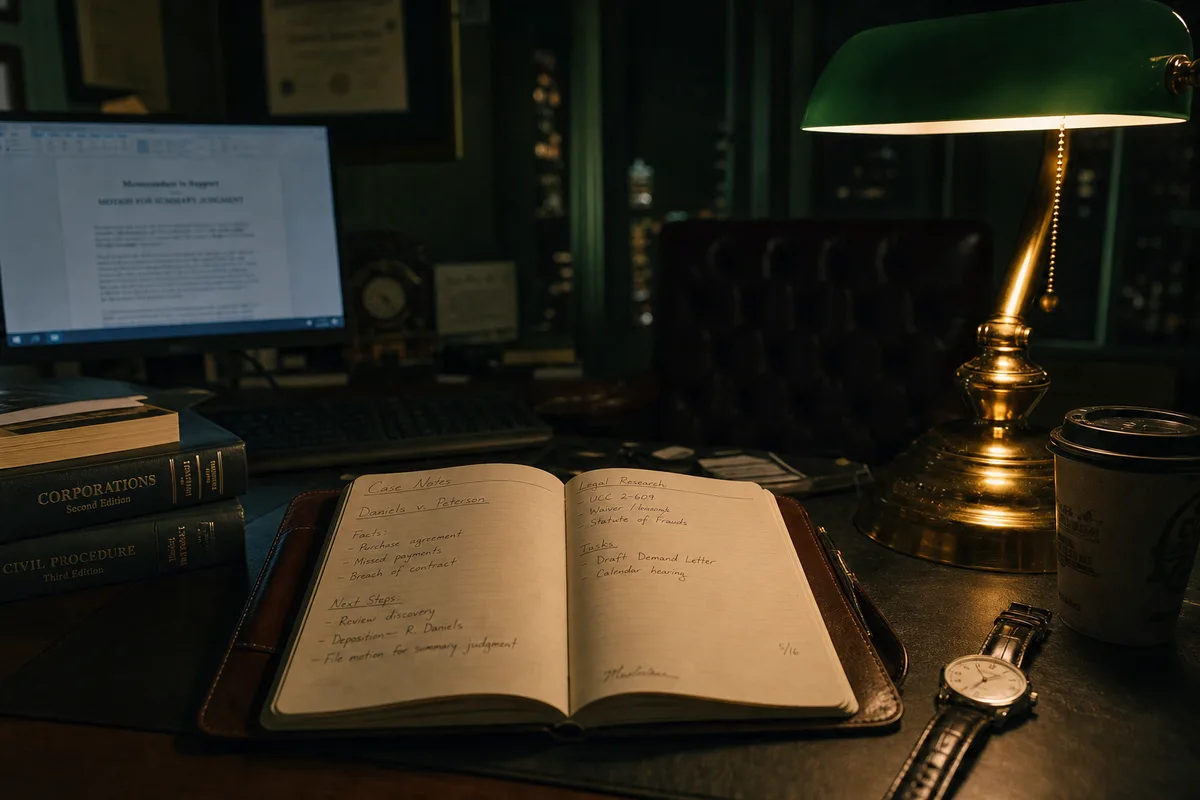
6:10 p.m.
The office is quiet, and you are doing the thing you do at the end of every day: sitting in front of a blank time sheet, reconstructing the last nine hours of your own life from physical evidence.
Sent mail says you wrote to opposing counsel at 9:52, call it 0.3. The calendar shows the noon client meeting: 1.0, that one's easy. There's the draft you touched, the filing, the two calls in the log.
What the evidence does not show is 11:38. At 11:38, opposing counsel called you, eleven minutes, unscheduled, in the hallway on your cell, and in those eleven minutes the discovery dispute that has been circling for three weeks actually got resolved. It was the single most valuable thing you did all day.
At 6:10 p.m., it feels like it took five minutes. You cannot swear it was eleven. Writing0.2 against your own uncertainty feels petty, so you write nothing. The most valuable act of the day is now, officially, something that never happened.
The archaeology
Reconstruction fails in one direction only. Meetings and emails leave artifacts, so meetings and emails get billed. The work that happens between artifacts (the hallway call, the eight minutes re-reading a declaration before you dared answer, the thinking) leaves nothing behind, so it quietly stops having existed.
You did the work. What evaporates is the record that you did.
And it is your best work that evaporates first, because your best work is the least clerical. Nobody forgets to log a two-hour document review. Everybody forgets the eleven-minute call that made the two-hour review unnecessary.
It isn't laziness. It's the meter.
The obvious fix, enter your time as you go, has been the obvious fix for decades, and it keeps not happening, because it asks a lawyer mid-thought to also be the stenographer of their own attention. Stopping to describe the work interrupts the work. The better you are concentrating, the worse you are at metering it.
So the honest ones round down. It feels virtuous: you would rather eat time than overstate a minute of it, and that instinct is correct. But notice what it means:the more scrupulous the lawyer, the bigger the silent write-down. The discount is real money, taken from the firm, awarded to no one, recorded nowhere.
What "captured" has to mean
The way out is not a better memory or a sterner policy. It is a record that writes itself from the work, and then asks your permission.
As it happens
Entries drafted from the actual call, the actual meeting, the actual document: timestamped, not remembered.
On the right matter
The eleven minutes lands on the case it belonged to, not in a Friday pile marked "allocate later."
Reviewed by you
Drafts, not decrees. You approve what's real and strike what isn't: the judgment about the day stays yours.
Honest both ways
No inflation, no silent write-down. The record matches the work, which is all a fee agreement ever promised.
The standard is not complicated. It was just impossible to meet by hand, at 6:10 p.m., from memory.
Where we come in
This is what billing with AI time capture is for. Archivar drafts your time entries from the work itself, the calls it answered and logged, the meeting it took notes in, the activity on the matter, with the timestamps already right. At the end of the day you review a drafted ledger instead of excavating a blank one: approve, adjust, strike. The 11:38 call is simply there, eleven minutes, on the right case.
Archivar supports your attorneys and staff. It never gives legal advice or replaces a lawyer's judgment. It keeps the record of your day. What any of it was worth remains your call.
Your fee agreement prices your judgment by the tenth of an hour. The tenths are the part nobody is watching.
Tomorrow will be another day you mostly don't write down. It doesn't have to be.
Archivar
The Archivar Editorial Desk
General information for attorneys, not legal advice.