The case you never knew you lost.
Every firm can name the clients it signed. Almost none can name the ones who called once, heard nothing, and moved on. That silence is the most expensive sound in a practice.
By Helena Harper, Editorial Director
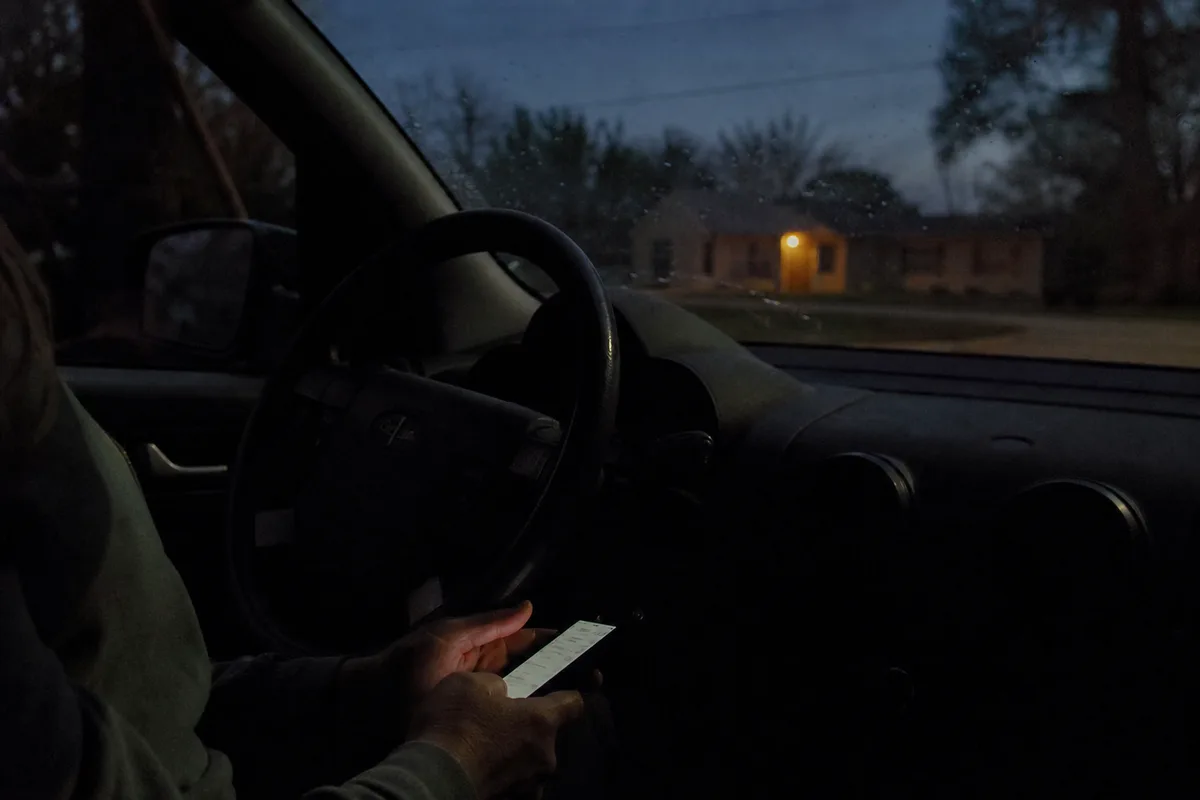
4:47 on a Friday
At 4:47 on a Friday, a woman sits in a parked car outside her sister's house and calls your firm.
She has been building up to this call for nine days. She has rehearsed the first sentence, because saying it out loud is what makes it real. Her hands are not steady.
The phone rings four times. Then a recording, in a voice she has never heard, asks her to leave a message after the tone.
She hangs up.
This is the part worth sitting with: she does not leave a message. She is not being difficult. She spent nine days working up to a conversation, and a conversation is not what she got. She is not going to pour the hardest thing in her life into a beep.
She goes back to the search results. Yours was the second name. There is a third.
The loss you can't see
Monday morning, nothing looks wrong.
Your call log shows a missed call at 4:47 with no voicemail, which is indistinguishable from a wrong number, a robocall, or a vendor. Your intake numbers are fine. Your conversion rate looks healthy, because it only counts the leads you actually captured. There is no line item for the case that dialed you and left.
Every other loss in a practice announces itself. A motion is denied on the record. A client fires you in an email you can reread at midnight. A blown deadline arrives loudly and all at once.
This one is silent. It has no docket number and no postmortem. And because you never see it, you have no reason to fix it, which is exactly what lets it keep happening.
It isn't neglect. It's arithmetic.
The obvious reading is that the firm was careless. It usually wasn't.
At 4:47 on a Friday, one of your two attorneys is in a deposition that ran long. The other is on the phone with a client who is also having the worst month of their life and deserves a whole attorney, not half of one. Your paralegal left at 4:30 for a school pickup that was never negotiable.
Nobody made a bad decision. Every person was doing exactly the work they should have been doing. That is the trap. A firm small enough to care that much is a firm that cannot be in two places at once, and these calls do not arrive when you are free. They arrive when something has happened.
Availability isn't a discipline problem. It's an arithmetic problem, and you cannot solve arithmetic by trying harder.
The first act of representation
We call it "reception," which makes it sound clerical: a desk, a greeting, a message slip. But the first ninety seconds of a caller's contact with your firm is not clerical. It is the moment she decides whether you are the kind of firm that picks up when things get bad.
She is not evaluating your motion practice. She can't. She has no way to judge your skill and she knows it. So she judges the one signal she has been given: what happened when she reached out. Answered, or not answered.
She isn't shopping. She's frightened. Someone will help her today. The only question is whose name is on the door.
What "answered" has to mean
If the fix is going to hold, "answered" has to mean more than a human voice picking up.
Every time
Not most times, and not business hours. The bad thing happened at 4:47 on a Friday. That is when she called.
A conversation, not a form
She will tell a listener what she will never type into a chat widget or say to a beep.
In her language
She can explain her own life better in Spanish than in English. So: both, without her having to ask.
Remembered
By Monday the whole story should already be in the matter, in her words, not a slip that says "call back re: family law."
None of that is exotic. All of it is simply hard to do at 4:47 on a Friday with two attorneys and a paralegal.
Where we come in
This is the call Archivar was built for. The agent answers every time, in English or Spanish, and has an actual conversation. It takes her details, opens the matter, books the consult, and writes all of it into your firm's memory, so the attorney who picks this up on Monday already knows her name, her situation, and what she said, in her words.
There is a hard line on the other side of that. Archivar supports your attorneys and staff. It never gives legal advice or replaces a lawyer's judgment. It answers the phone, gets her story down, and gets it to the person who can actually help her. The judgment stays where it belongs.
The clients you signed this year are in a spreadsheet. The ones who called once and heard nothing are not in any spreadsheet at all.
You can't get Friday's call back. You can answer the next one.
Archivar
The Archivar Editorial Desk
General information for attorneys, not legal advice.