The form that almost got filled out.
At 11:40 on a Tuesday night, someone with an eviction notice on the counter opens a firm's contact form. Case number. Matter type, pick from a dropdown. She doesn't have either answer. She closes the tab, and the firm never knows she was there.
By Helena Harper, Editorial Director
Case number, unknown
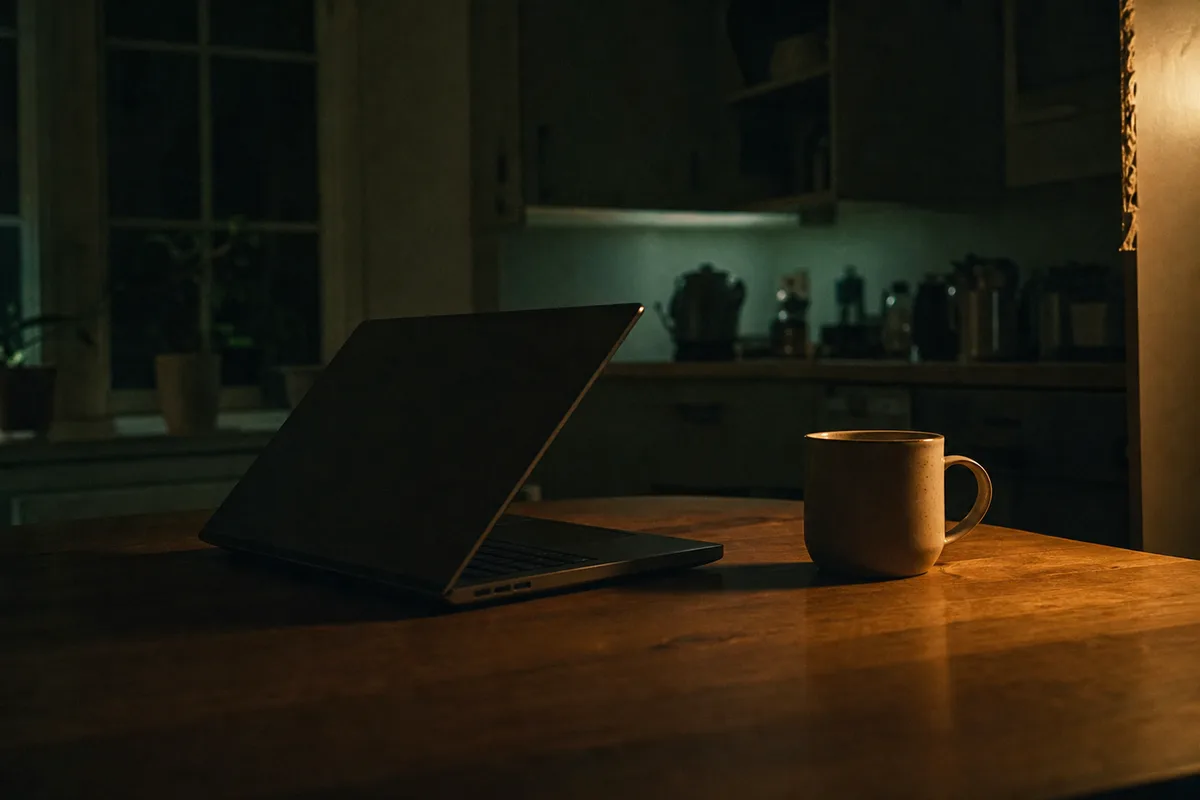
There's an eviction notice on the kitchen counter, three days old, and she has finally worked up the nerve to do something about it. It's 11:40 p.m. The kids are asleep. She finds a firm through a search result that sounded like it handled her kind of problem, and clicks "Contact Us."
The form asks for her name and phone number, which is fine. Then it asks for a case number. She doesn't have a case number. There's no case yet, that's the whole reason she's here. Then a dropdown: Matter Type. Landlord-Tenant. Civil Litigation. Real Property. General Inquiry. She reads the list twice. Her problem could plausibly be any of them and she has no idea which one gets read first, or read at all.
She picks one, guesses at a required field she doesn't understand, and the page reloads with a red asterisk next to something else. That's where it ends. Not a slammed laptop, nothing dramatic. Just a tab closed, quietly, at 11:41 p.m.
Nobody at the firm will ever know this form was started. There's no lead in the CRM, no missed-call log, no voicemail to feel bad about not returning. The record of the visit is gone the moment the tab closes.
The form was built for the firm's convenience, not hers
Case numbers and matter-type dropdowns exist to route a submission to the right inbox. That's a reasonable thing for a firm to want. It is not a reasonable thing to ask of someone who is having, by her own estimate, one of the worst weeks of her adult life and does not speak the firm's internal taxonomy.
A form assumes the visitor already knows what kind of case they have, what stage it's at, and which category label matches it. Most people with an urgent legal problem know none of that. They know what happened to them. "There's a notice on my door and I don't know what it means" is a complete, urgent, answerable sentence, and it is also not a value that fits in a dropdown.
A Martindale-Avvo survey, Understanding the Legal Consumer, found that 86% of legal consumers used some kind of online resource for their matter, and 84.8% of people planning to talk to a lawyer called their matter extremely or somewhat urgent. The visitor to that form is not window shopping. She is trying to solve something tonight, on the only device and the only hour she has, and the form is asking her to pass a test she didn't study for.
What a conversation asks for instead
A conversation doesn't front-load a taxonomy. It starts with "what happened," listens to the answer, and asks the next question based on what it just heard, the way the person at the front desk would if she'd called during business hours instead. No dropdown to guess at, no required field with a label she doesn't recognize.
Notably, Clio's 2024 Legal Trends Report, as summarized by 2Civility, the Illinois Supreme Court Commission on Professionalism, found only 7% of law firms use a chatbot on their website at all, even though 51% of prospective clients say a chatbot can be a helpful starting point. Most firms simply haven't built the middle ground between "static form" and "wait for a callback," and that gap is exactly where a form like hers gets abandoned.
A conversation, not a form
No dropdown to guess at. Archivar's AI Intake asks what happened in plain language and follows up the way a person would, at any hour.
Whatever hour it is
11:40 p.m. is a normal time for a legal problem to become undeniable. The intake conversation doesn't know it's supposed to be closed.
The matter actually opens
What she says becomes a real intake record your team can see in the morning, not a half-filled form sitting in nobody's inbox.
Nothing goes quiet
She gets a next step before she closes the laptop: what happens next, and when a person will call her back.
The part where we're honest
We build the thing that replaces the dropdown, so it's worth saying plainly what it does and doesn't do.
Archivar's AI Intake holds an actual conversation with whoever shows up, at 11:40 p.m. or any other hour, in English or Spanish. It asks what happened, follows up the way a person would, and turns the answers into a real intake record your team can see when the office opens, instead of nothing at all. That's the specific problem it solves: the visit that used to leave no trace now leaves one.
There's a hard line on the other side of that. Archivar supports your attorneys and staff. It never gives legal advice or replaces a lawyer's judgment. It asks, listens, writes it down, and hands it to you. The judgment stays where it belongs.
She never submitted that form. Nobody followed up, because there was nothing to follow up on. The eviction notice is still on the counter.
Somewhere tonight, someone else is staring at a different dropdown. The only question is whether your firm finds out she was there.
Archivar
The Archivar Editorial Desk
Researched and fact-checked against primary sources. General information for attorneys, not legal advice.
Sources: Martindale-Avvo, Understanding the Legal Consumer (2023); the Clio 2024 Legal Trends Report, as summarized by 2Civility, the Illinois Supreme Court Commission on Professionalism.