Wisconsin's evidence code has gone 53 years without a full review. A draft overhaul is open for comment until December 1.
The Wisconsin Judicial Council has proposed rewriting chapters 901 to 911 in federal-style plain language. Most changes are labeled non-substantive. One would limit expert opinions on a criminal defendant's mental state.
By Simone Beaumont, Senior Editor
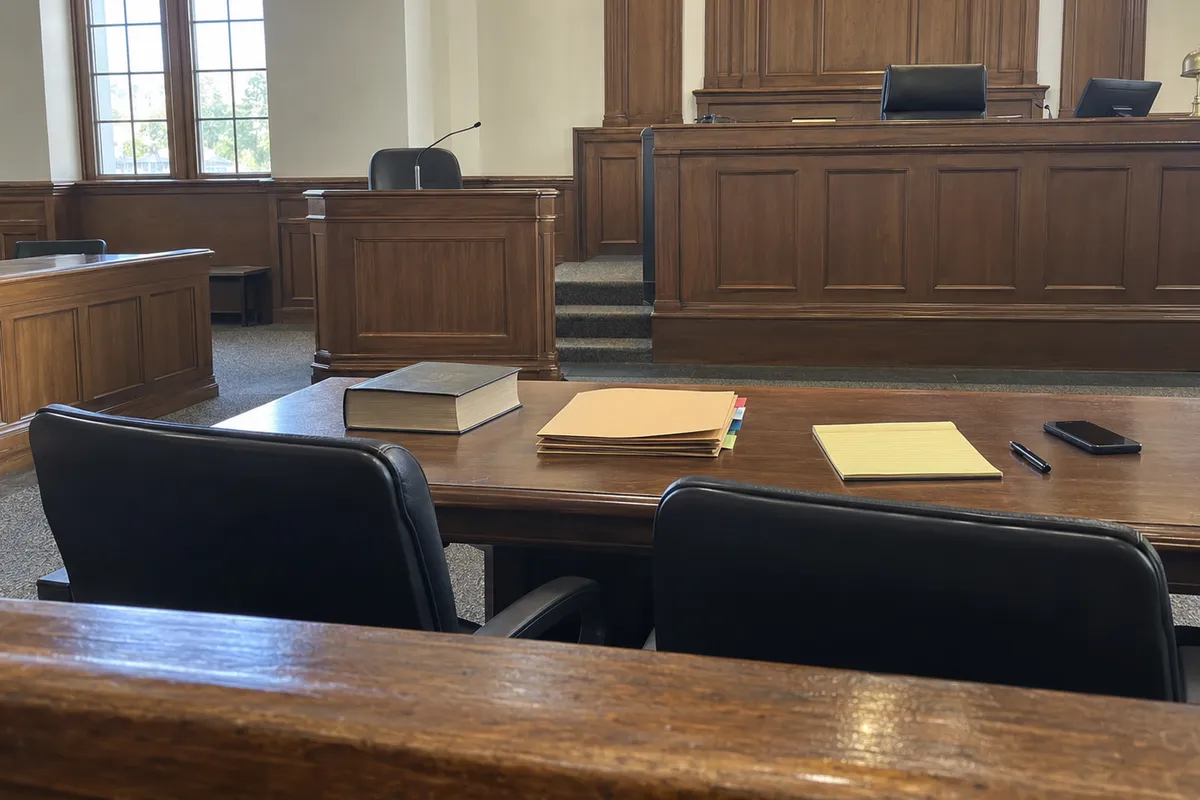
The Judicial Council opened comments on a proposed evidence code rewrite
On October 1, 2026, the Wisconsin Judicial Council released a proposed comprehensive revision of the Wisconsin Rules of Evidence and opened it for public comment. The comment period runs through December 1, 2026.
Comments must be submitted through an online form on the Judicial Council's website. The Council will post submitted comments on its website. Those comments may be cited in a later rule petition.
The State Bar of Wisconsin's InsideTrack reported the comment period on October 7, 2026. After comments close, the Council will decide whether further amendments are needed. InsideTrack reported that the Council expects to submit a rule petition to the Wisconsin Supreme Court in early 2027.
The Council's overview anticipates one or more public hearings before the court decides. The proposal has not been adopted.
The rules are found in Wis. Stat. chapters 901 through 911. Section 911.02 provides that those chapters may be cited as the Wisconsin Rules of Evidence.
A committee spent almost four years comparing Wisconsin law with federal rules
Wisconsin first adopted its evidence rules in 1973, effective January 1, 1974. According to InsideTrack, no comprehensive review or restyling has occurred in the 53 years since.
The original rules were themselves a Judicial Council project. Advising the Wisconsin Supreme Court on such matters is a core function of the Council under Wis. Stat. § 758.13(2)(a).
The Council's Evidence and Civil Procedure Committee began the overhaul in late 2022. It reviewed every provision except chapter 905, which contains the privilege statutes. The committee left that chapter alone because there is no comparable federal rule and no obvious need to revise the Wisconsin statutes.
The Council identified several reasons for a full review. Some provisions were difficult to find. The organization had broken down as new provisions were added. Case law needed to be codified. The code had not received a significant update in more than fifty years.
The committee compared each chapter with the comparable federal rule and Wisconsin case law. It used a plain language drafting style as far as possible. Comparable federal rules were adopted unless Wisconsin case law or existing language made the change unnecessary. In several instances, the recommendation is to withdraw a current Wisconsin rule.
The committee included civil and criminal practitioners, prosecutors, plaintiffs' and defense lawyers, trial judges and academics. Professor Daniel Blinka of Marquette University Law School served as an advisor, and the overview identifies him as the source of the original suggestion for the project. Professor David Schwartz of the University of Wisconsin Law School was a former advisor. Thomas Shriner of Foley & Lardner chairs the committee.
The overview says not every member favored every item. It also says the final product carries the committee's unanimous endorsement.
The draft relabels several hearsay provisions without changing their admissibility
The proposed § 908.01(4) would change the labels used for two familiar categories of statements. Under current Wisconsin law, following the 1974 federal approach, prior statements by witnesses and statements by a party opponent are called “not hearsay,” even though they may be offered to prove the truth of what they assert.
The draft would classify those statements as hearsay exceptions. It would state that the statement “is not excluded by the rule against hearsay.” The Council describes the change as conceptual, not substantive. Statements admissible under current law would remain admissible.
The draft also moves the past-recollection-recorded exception from § 908.03(5) into § 908.01(4). The reason is that it is the only exception in § 908.03 that requires the declarant to testify. Wisconsin would retain its practice of receiving the recorded statement as an exhibit. According to the Council, the federal rule only permits the writing to be read into the record.
The proposed treatment of prior inconsistent statements would not change Wisconsin law. A testifying witness's prior inconsistent statement may already be used for impeachment, as substantive proof, or for both purposes.
The federal rule is being revised to take the same approach, effective December 1, 2026. That amendment to Federal Rule of Evidence 801(d)(1)(A) drops the requirement that the earlier statement have been made under penalty of perjury.
The draft would adopt the current federal formulation for prior consistent statements. It covers statements offered to rebut a charge of recent fabrication or improper motive, as well as statements offered to rehabilitate credibility “when attacked on another ground.”
The party-opponent provisions would gain a derivative-statements rule drawn from the final paragraph of Federal Rule 801(d)(2). When a party's claim or liability derives from a declarant, statements admissible against the declarant would be admissible against the party.
The draft also adopts the federal anti-bootstrapping sentence. The statement itself counts toward, but does not alone establish, the declarant's authority, the agency relationship or the conspiracy.
The proposed mental-state limit would affect expert testimony in criminal cases
The proposed § 907.04(2) would add a new Wisconsin subsection based on Federal Rule of Evidence 704(b). In a criminal case, an expert witness could not state an opinion about whether the defendant did or did not have a mental state or condition that is an element of the charged crime or of a defense.
That matter would be for the trier of fact alone. The Council's commentary connects the proposal to testimony by experienced police officers about a defendant's intent in drug, gang and sexual assault cases. It also discusses Diaz v. United States, a 2024 decision of the United States Supreme Court.
The Council states that current Wisconsin law offers no comparable protection. Its commentary calls the proposal “far from perfect.”
The Archivar Editorial Desk read the Judicial Council's 153-page overview before publishing. The document places each current Wisconsin rule beside the proposed version in two columns, followed by the Council's comments. In most of the comment boxes the desk checked, the Council states that no substantive change is intended. Substantive proposals such as the new expert-testimony limit in § 907.04 are the minority.
Privileges and expert reliability would remain outside the rewrite
Chapter 905, covering privileges, is not part of the proposed overhaul. The committee left it unchanged because there is no comparable federal rule and the Council identified no obvious need to revise the privilege statutes.
Section 907.02 also would not change. The Legislature revised that provision through 2025 Wisconsin Act 92, effective March 7, 2026. The proponent must demonstrate to the court that it is “more likely than not” that the testimony meets the reliability requirements. The Council recommends no further change.
The draft would make smaller definitional changes. New § 901.01 would include definitions drawn from Federal Rule 101, including a provision that a reference to written material includes electronically stored information. The Council says no substantive change is intended.
Proposed § 911.01(6), based on Federal Rule 1101(e), would state that a statute or Wisconsin Supreme Court rule may admit or exclude evidence independently of chapters 901 through 911.
The rules remain unchanged while the court considers any later petition
Nothing changes in Wisconsin courtrooms yet. The current chapters 901 through 911 govern unless the Wisconsin Supreme Court acts on a later petition. The court may hold hearings and may change the proposed text before any adoption.
If adopted, the revisions would change section numbers and wording in many places. Federal-style plain language, relabeled hearsay exceptions and the moved past-recollection-recorded exception would affect briefs, jury instruction references, trial notebooks and form objections. The Council says that tracking federal wording would let courts and lawyers draw on federal case law.
Criminal practitioners on both sides would need to review the proposed § 907.04(2), particularly where expert testimony concerns a defendant's mental state or testimony comes from police experts.
Archivar, which publishes The Docket, builds an operating system for law firms that answers every call 24/7 in English and Spanish, runs intake, manages matters and remembers everything the firm does. A firm with Wisconsin trial matters can record in its matter files that the evidence code proposal is pending and that comments are due December 1, 2026.
The comment window is open to attorneys and the public through December 1, 2026. The Council's online form is the place to submit comments.
The proposed revision is not in force.
Comments must reach the Judicial Council by December 1, 2026.
Any adoption, and any change to the text, rests with the Wisconsin Supreme Court.
The proposal
A comprehensive revision of the Wisconsin Rules of Evidence, every chapter except 905 (privileges), released October 1, 2026.
The deadline
Public comments through the Judicial Council's online form until December 1, 2026. A rule petition is expected in early 2027.
The substantive change
Proposed § 907.04(2) would bar experts in criminal cases from opining on whether the defendant had the required mental state.
Not in force
The current chapters 901 to 911 govern until the Wisconsin Supreme Court acts, and it may hold hearings and change the text.
Archivar
The Archivar Editorial Desk
Every rule number, date and quotation above was checked against the Wisconsin Judicial Council's October 1, 2026 overview, which the desk downloaded and read, and against the Council's comment page and the State Bar of Wisconsin's InsideTrack report. This article is general information, not legal advice.
Sources: Wisconsin Judicial Council, "Overview of the Wisconsin Judicial Council's Proposed Rules of Evidence Comprehensive Revision" (October 1, 2026); Wisconsin Judicial Council, Open for Comment page, "Proposed Rules of Evidence Comprehensive Revision" (comment period October 1 to December 1, 2026); State Bar of Wisconsin, InsideTrack, "Open Comment Period for Revised and Restated Wisconsin Rules of Evidence" (October 7, 2026); Wis. Stat. chs. 901 to 911 and § 758.13(2)(a); 2025 Wisconsin Act 92; Federal Rules of Evidence 704(b) and 801(d); Diaz v. United States, 602 U.S. 526 (2024).