Illinois will let courts weigh a pet's well-being when the owners never married.
Public Act 104-0613 writes companion animals into the replevin article of the Code of Civil Procedure, lets a court consider the animal's well-being whatever the parties' legal status, and says ownership documentation may not decide the question on its own. It takes effect January 1, 2027. Three consequences for practicing attorneys.
By Helena Harper, Editorial Director
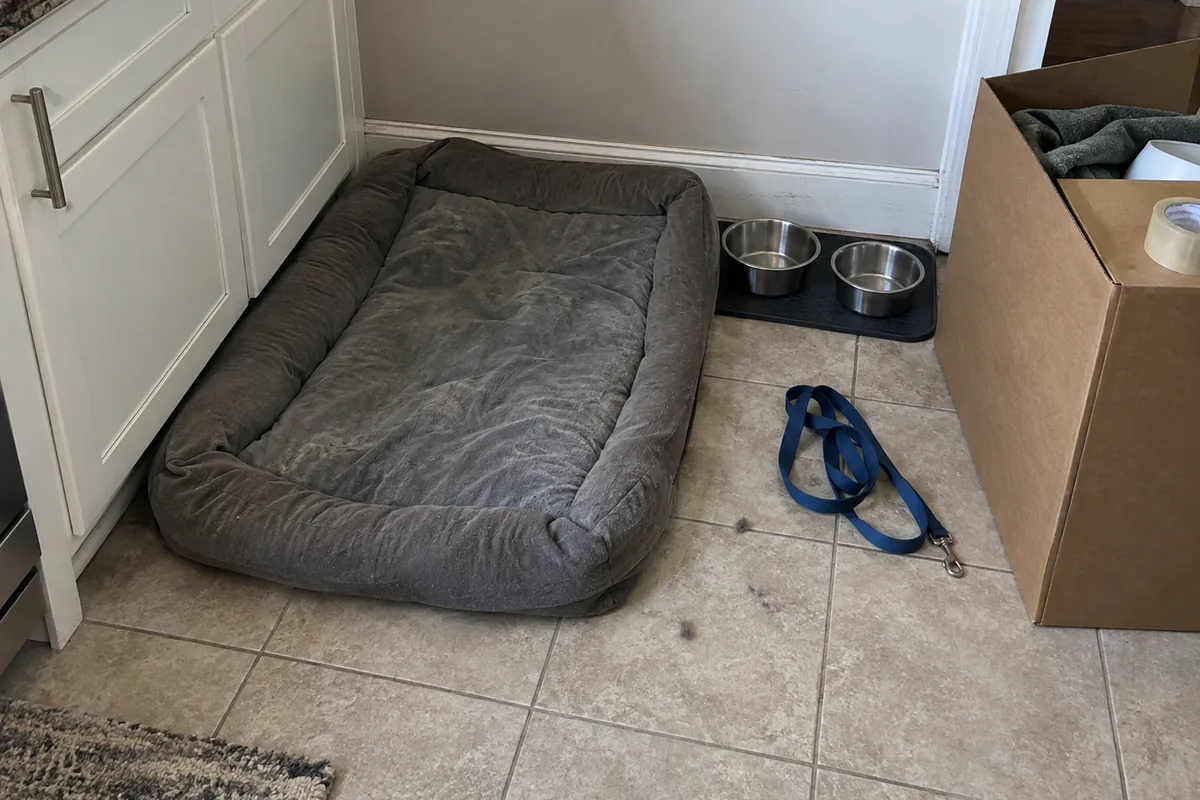
The new Illinois statute puts companion animal disputes into the replevin article, and ownership papers alone will not decide who keeps the animal. Public Act 104-0613 allows a court to consider the animal's well-being in a possession dispute between people who were never married. It takes effect January 1, 2027.
The new remedy remains an ordinary replevin action
Section 10 of the Act amends 735 ILCS 5/19-101 and adds 735 ILCS 5/19-106.5 and 735 ILCS 5/19-130. All three provisions sit in Article XIX of the Code of Civil Procedure, the replevin article.
Replevin remains the civil action to recover goods or chattels wrongfully taken or wrongfully detained. The amended Section 19-101(a) keeps that language. The Act adds companion animal provisions to the existing framework rather than creating a family law proceeding.
Under new Section 19-101(b), a companion animal is an animal commonly considered to be, or considered by the owner to be, a pet. The definition is not limited to one species. It includes canines, felines and equines, among other animals.
New Section 19-101(c) also identifies who may be treated as a party in a replevin action involving a companion animal. The category includes domestic partners, former partners, cohabitants, fiances and roommates when shared responsibility for the animal's care can be demonstrated. That condition matters. The relationship alone does not establish status as a party under the new provision.
The court may weigh welfare without changing the property framework
New Section 19-130(a) says that, in a possession dispute involving a companion animal, a court may consider the animal's well-being regardless of the parties' legal status. The statute uses "may," not "shall." The decision remains discretionary.
The Act's legislative findings state that Illinois law had allowed courts to consider an animal's well-being primarily in dissolution of marriage proceedings, while courts handling disputes between unmarried parties might lack specific statutory guidance. The Act identifies its purpose as giving courts guidance in companion animal possession disputes "while preserving existing property law principles." It does not reclassify animals as something other than property.
The listed evidence includes the history of daily caregiving; feeding, grooming, veterinary and training involvement; financial contributions; emotional bonds; stability and continuity of the animal's living environment and routine; safety considerations and past conduct affecting the animal; credible witness testimony; and the animal's age and physical or behavioral vulnerability.
Ownership documentation is relevant, but it may not be determinative by itself. For an animal at least 10 years old, the court may give additional consideration to continuity of environment, emotional stability, stress minimization and established routines. The court may order mediation when appropriate to resolve possession issues.
Temporary possession can address disruption during the case
New Section 19-106.5 permits the court, at the initiation of and during the replevin dispute, to issue temporary possession or caregiving orders. Those orders may include limited visitation if necessary to reduce stress or disruption to the animal.
The provision connects that relief to the discretion described in Section 19-130. It also preserves the existing notice exception in Section 19-106 when the court finds that summary seizure is justified by necessity. That finding must appear on the record and be supported by evidence. Section 19-106 allows notice to the defendant to be skipped only on one of five grounds: imminent destruction or concealment of the property, imminent removal of it from the State, its perishable nature, an imminent fraudulent sale, transfer or assignment, or recovery from a defendant who obtained possession by theft.
At an ex parte hearing on notice, the court examines the evidence on each element. If it finds notice unnecessary, it orders a hearing as soon as practicable on entry of a replevin order. The new companion animal provisions do not remove those requirements.
The 2027 Act reaches unmarried parties through civil procedure
Illinois already directs courts to consider an animal's well-being in a different setting. Under 750 ILCS 5/503(n), if a court finds that a companion animal is a marital asset, it shall allocate sole or joint ownership and responsibility for the animal, and it shall consider the animal's well-being in making that order. Public Act 100-422 added that provision, effective January 1, 2018. It excludes a service animal as defined in Section 2.01c of the Humane Care for Animals Act.
The difference is direct. The 2018 dissolution provision is mandatory because it uses "shall," and it applies to married parties in a divorce. Public Act 104-0613 is discretionary because it uses "may," and it operates through replevin for disputes outside the dissolution statute.
Other states that have legislated on companion animals did so inside divorce or dissolution law. Alaska Statutes 25.24.160(a)(5), enacted by House Bill 147 and effective January 17, 2017, directs a court entering a divorce judgment to provide for ownership or joint ownership of an animal while considering the animal's well-being. California Family Code section 2605, effective January 1, 2019, lets a court in a dissolution or legal separation assign sole or joint ownership of a pet animal after considering its care. New York Domestic Relations Law section 236, Part B, applies in a divorce or separation proceeding and directs the court to consider the animal's best interest when awarding possession.
The Animal Legal Defense Fund has claimed, as reported by the ABA Journal, that Illinois enacted the nation's first law aimed at pet disputes between unmarried people. Its senior staff attorney Kathleen Wood said many states address pets in divorce but none had addressed separations of unmarried cohabitants.
The bill moved from a narrow proposal into Article XIX
Rep. Barbara Hernandez filed House Bill 4540 on January 22, 2026. The House Judiciary - Civil Committee reported it do pass on March 25 by a vote of 13-7.
As introduced, the bill created a freestanding Companion Animal Custody Equity Act, and its definition covered only a domesticated dog or cat residing in a household. House Floor Amendment No. 1, filed April 7, replaced everything after the enacting clause. The amendment moved the substance into the replevin article and broadened the definition to the open-ended category that includes equines. The House adopted it April 14, the same day the House passed the bill 72-38.
Sen. Linda Holmes was the Senate chief sponsor. The Senate Judiciary Committee reported the bill do pass May 6 by 8-0, and the Senate passed it May 19 by 52-7. Governor JB Pritzker signed it July 24, making it Public Act 104-0613.
January 1, 2027 controls the filing, proof and interim relief analysis
Nothing changes for a dispute today. Public Act 104-0613 becomes effective January 1, 2027. The Act does not state how it applies to cases already pending on that date.
Article XIX, not the divorce statute
The Act changes 735 ILCS 5/19-101 and adds Sections 19-106.5 and 19-130, all inside the replevin article of the Code of Civil Procedure. The case is an ordinary civil action.
Ownership papers are not decisive
Documentation of ownership is one of eleven considerations listed in new Section 19-130(a), and the statute says it may not be determinative on its own.
Who can be a party
Section 19-101(c) reaches domestic partners, former partners, cohabitants, fiances and roommates, but only where shared responsibility for the animal's care can be demonstrated.
Known as Rosie's Law
The Act is named for a puggle whose caretaker was turned away because she and the dog's other owner had never married. Its sponsor, Rep. Barbara Hernandez, said of unmarried owners: "There was no path for them to fight for the animal."
For a qualifying dispute filed on or after the effective date, file a replevin action under Article XIX, including the applicable companion animal allegations under Section 19-101. Plead and support the facts showing shared responsibility for care if the opposing party's status depends on being a domestic partner, former partner, cohabitant, fiance or roommate.
Gather evidence tied to the statutory factors: caregiving history, veterinary and training involvement, financial contributions, living stability, safety, witness testimony, routine, and the animal's age and vulnerability. Do not rely on ownership papers alone.
If temporary possession, caregiving or limited visitation is needed, request relief under Section 19-106.5. If seeking to proceed without notice, present evidence addressing one or more of the five necessity grounds in Section 19-106 and obtain the required record findings.
The statute keeps the animal in the property column and changes what the court may look at.
Until January 1, the papers still decide it.
Archivar
The Archivar Editorial Desk
Fact-checked against the authorities listed below. This article is for general informational purposes and is not legal advice.
Sources: Illinois Public Act 104-0613, full text, Illinois General Assembly; Illinois General Assembly, Bill Status of HB4540, 104th General Assembly; 735 ILCS 5/19-101, 19-106, 19-106.5 and 19-130, Code of Civil Procedure, Article XIX; 750 ILCS 5/503(n) and 750 ILCS 5/452, Illinois Marriage and Dissolution of Marriage Act; Illinois Public Act 100-422; Alaska Statutes 25.24.160, as amended by House Bill 147; California Family Code section 2605, added by Assembly Bill 2274 (2018); New York Domestic Relations Law section 236, Part B, as amended by Senate Bill S4248 (2021); ABA Journal, September 14, 2026; Chicago Sun-Times, July 29, 2026.