The 100-mile subpoena limit would be measured from the witness, not the court.
A Ninth Circuit decision in 2023 kept Rule 45's 100-mile radius pinned to the courthouse even when the witness appeared by video. A proposed rewrite of the rule would move the measurement, name four ways to serve a subpoena, and require 14 days' notice before a commanded appearance. Three consequences for practicing attorneys.
By Helena Harper, Editorial Director
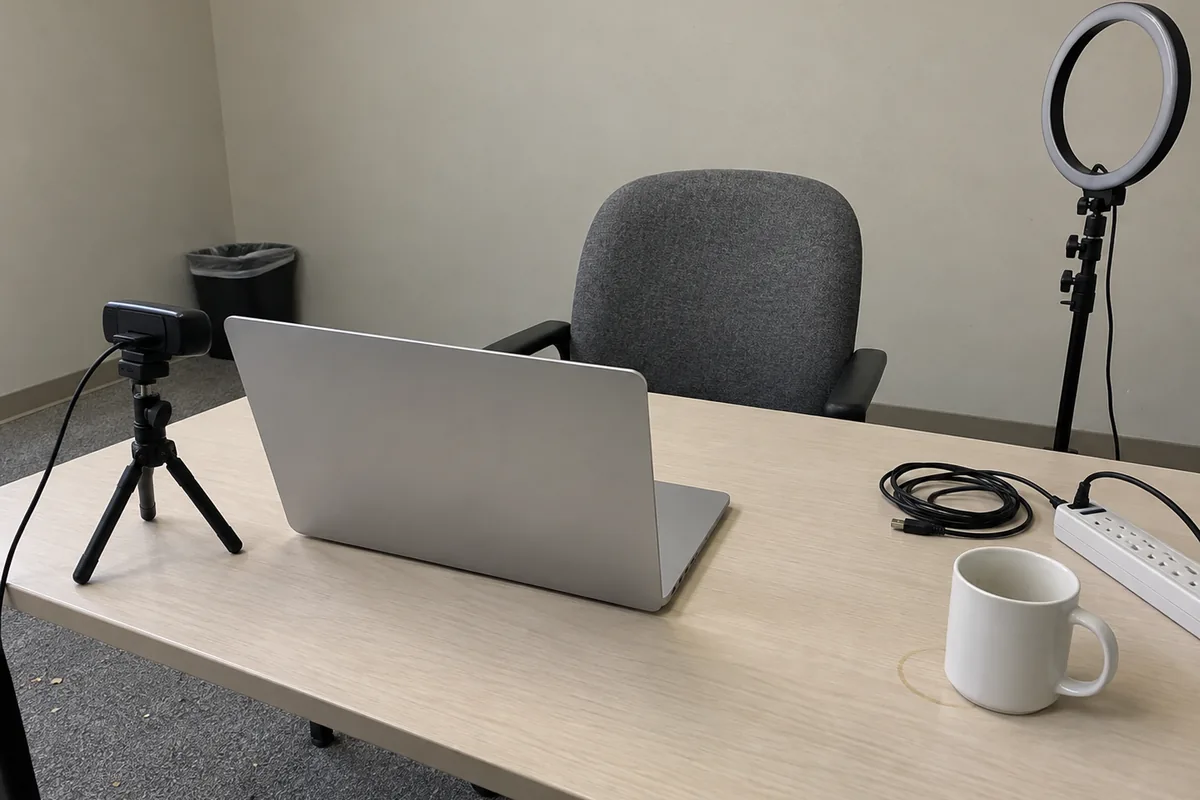
Two witnesses, Mr. and Mrs. Kirkland, had relocated from California to the U.S. Virgin Islands when a bankruptcy court in the Central District of California commanded them to give trial testimony by video conference. They moved to quash the trial subpoenas, arguing that the subpoenas violated the geographic limits in Federal Rule of Civil Procedure 45(c)(1).
The Ninth Circuit agreed on July 27, 2023. In re Kirkland, 75 F.4th 1030 (9th Cir. 2023), held that a subpoena can compel remote trial testimony only if the witness resides, is employed, or transacts business in person within 100 miles of the court, or within the state where the court sits. The place of compliance under Rule 45(c)(1)(A) is the seat of the proceeding, not the location of the witness, and the means of transmission did not remove the limit.
A proposed amendment would move the measurement to the witness. It is not in effect. Rule 45 as written governs every subpoena served today.
The proposed subsection would measure remote attendance from the witness
The amendment would add a new Rule 45(c)(2), titled "For Remote Testimony." Read with Rule 45(c)(1), it would make the place of attendance for remote testimony "the location where the person is commanded to appear in person." The existing Rule 45(c)(2), "For Other Discovery," would become Rule 45(c)(3), with no change to its substance.
The Committee Note says the amendment would clarify that subpoena power for in-court testimony and for discovery extends nationwide, so long as the subpoena does not command the witness to travel farther than Rule 45(c)(1) permits. The testimony would still occur, for purposes of Rule 43 and Rule 77(b), in the court conducting the proceeding.
The note traces the question to 2013, when Rule 45(a)(2) was amended so that a subpoena must issue from the court where the action is pending and Rule 45(b)(2) came to permit service anywhere in the United States. It also cites a decision reaching the opposite result on document production, York Holding, Inc. v. Waid, 345 F.R.D. 626 (D. Nev. 2024).
Court permission and the distance limits would still apply
The note says the amendment would not alter the standards for deciding whether to permit in-court remote trial testimony. Rule 43(a) still requires court permission, for good cause in compelling circumstances and with appropriate safeguards, before a witness testifies "by contemporaneous transmission from a different location." The distance caps in Rule 45(c)(1) would be unchanged, and the serving party would have to ensure the necessary technology is available at the remote location. Bankruptcy practitioners face a separate change on the permission question, covered here inthe amendments giving bankruptcy contested matters their own standard for testimony by video.
One word in the service provision has divided courts
Rule 45(b)(1) as written lets any person at least 18 years old who is not a party serve a subpoena. It requires delivering a copy to the named person and, if attendance is required, tendering the fees for one day's attendance and the mileage allowed by law. The operative word is "delivering."
The Committee Note states that "courts have disagreed about whether the rule requires hand delivery," and that the resulting uncertainty has on occasion caused delays and imposed costs.
The amendment would split the provision into subparagraphs (A) and (B) and rename the heading from "By Whom and How; Tendering Fees" to "By Whom and How; Means; Notice Period; Fees." Proposed Rule 45(b)(1)(A) would keep the requirement that the server be at least 18 and not a party, then name four means of service.
The first is delivering a copy to the named person personally. The second is leaving a copy at the person's dwelling or usual place of abode with someone of suitable age and discretion who resides there. The third is sending a copy to the person's last known address by United States mail or commercial-carrier delivery, if the method provides confirmation of actual receipt by a person identified in the first two. The fourth is another means a court authorizes for good cause and that is reasonably calculated to give notice.
The first two track Rule 4(e)(2)(A) and (B), the methods for serving a summons and complaint. The note does not prescribe the exact means of confirmation for the third, and says good cause for the fourth would ordinarily require at least first resort to the others.
Fourteen days' notice, and a later moment to tender the fee
Proposed Rule 45(b)(1)(B) would carry the heading "Time to Serve if Attendance Is Required; Tendering Fees." Unless the court orders otherwise, a subpoena requiring attendance at a trial, hearing or deposition would have to be served at least 14 days before the date the person is commanded to attend.
Rule 45(a)(4) already requires the serving party to notify the other parties before service, but the rule requires no advance notice to the person commanded to appear. Compliance may be difficult without reasonable notice, the note says, and emergency motions for relief can burden courts. For good cause a court could shorten the period.
The same subparagraph would loosen the timing of the witness fee, which could be tendered either at service or at the time and place of the commanded appearance. The amendment removes tender at service as a prerequisite to effective service, though the note says it should still be done whenever practicable. Section 1821(b) of title 28 sets the attendance fee at $40 for each day of attendance. Fees and mileage would still not be owed when the subpoena issues on behalf of the United States or any of its officers or agencies.
December 1, 2027 is the earliest possible effective date
The proposal appears in the Report of the Judicial Conference Committee on Rules of Practice and Procedure, Agenda E-19, Rules, September 2026, revised August 27, 2026. The Advisory Committee on Civil Rules, chaired by Judge Sarah S. Vance of the Eastern District of Louisiana, met in Charlotte, North Carolina, on April 14, 2026, and recommended final approval of amendments to Civil Rules 7.1, 26, 41(a), 45(b), 45(c) and 81. The Rule 41(a) proposal from the same package is covered here ina separate piece.
The Standing Committee, chaired by Judge James C. Dever III, met June 3 and 4, 2026, and unanimously approved those recommendations after minor clarifying revisions to the Rules 26 and 45(b) proposals. The proposals had been published for public comment in August 2025, and the written comment period closed February 16, 2026.
The report recommends that the Judicial Conference approve the amendments and transmit them to the Supreme Court. The Administrative Office lists December 1, 2027 as the potential effective date: if the Court adopts them and transmits them to Congress by May 1, 2027, and Congress takes no contrary action, they take effect that day. The Conference's own Report of the Proceedings for its September 2026 session had not been published when this piece was checked, and neither the Court nor Congress has acted on the Rule 45 amendments.
How this desk read the proposal
The copy of the report read here carries a revision stamp of August 27, 2026, and the Rule 45 material was taken from the redline and Committee Notes in its Appendix D, where new material is underlined and matter to be omitted is lined through, rather than from a summary. The citation to In re Kirkland was checked against the reported decision.
Archivar, which publishes The Docket, is an operating system for a law firm. It answers every call 24 hours a day in English and Spanish, runs intake, manages matters and remembers everything the firm does. A 14-day service window counted backward from a commanded appearance date is the kind of dated obligation a firm tracks against its own record of a matter.
Three consequences for practicing attorneys
The proposal raises three immediate consequences for attorneys who serve subpoenas, calendar witness appearances and plan remote trial testimony while Rule 45 as written remains controlling.
Nationwide, inside the same limits
New Rule 45(c)(2) would set the place of attendance for remote testimony at the location where the person is commanded to appear in person. The distance caps in Rule 45(c)(1) would still apply to that location.
Four named means of service
Personal delivery, the dwelling-house method borrowed from Rule 4(e)(2)(B), mail or commercial carrier with confirmation of actual receipt, or another means a court authorizes for good cause.
Fourteen days before attendance
A subpoena commanding attendance at a trial, hearing or deposition would have to be served at least 14 days out, unless the court orders otherwise. The court could shorten the period for good cause.
Nothing is effective yet
The Administrative Office lists December 1, 2027 as the potential effective date. The Supreme Court and Congress each still have a step in the sequence.
None of this changes a subpoena served this week. In the circuit that decidedKirkland, the 100-mile measurement still runs from the courthouse, and the witness fee still has to be tendered at service.
A proposed rule can name four ways to serve a subpoena and still not be the rule.
Until the last step is taken, the text on the page is the text that binds.
Archivar
The Archivar Editorial Desk
Fact-checked against the authorities listed below. This article is for general informational purposes and is not legal advice.
Sources: Report of the Judicial Conference Committee on Rules of Practice and Procedure, Agenda E-19, Rules, September 2026, revised August 27, 2026, including Appendix D, Proposed Amendments to the Federal Rules of Civil Procedure; United States Courts, Pending Rules and Forms Amendments; Federal Rule of Civil Procedure 45; Federal Rule of Civil Procedure 43(a); Federal Rule of Civil Procedure 4(e)(2); In re Kirkland, 75 F.4th 1030 (9th Cir. 2023); York Holding, Inc. v. Waid, 345 F.R.D. 626 (D. Nev. 2024); 28 U.S.C. section 1821; Rules Enabling Act, 28 U.S.C. sections 2071 to 2077.